
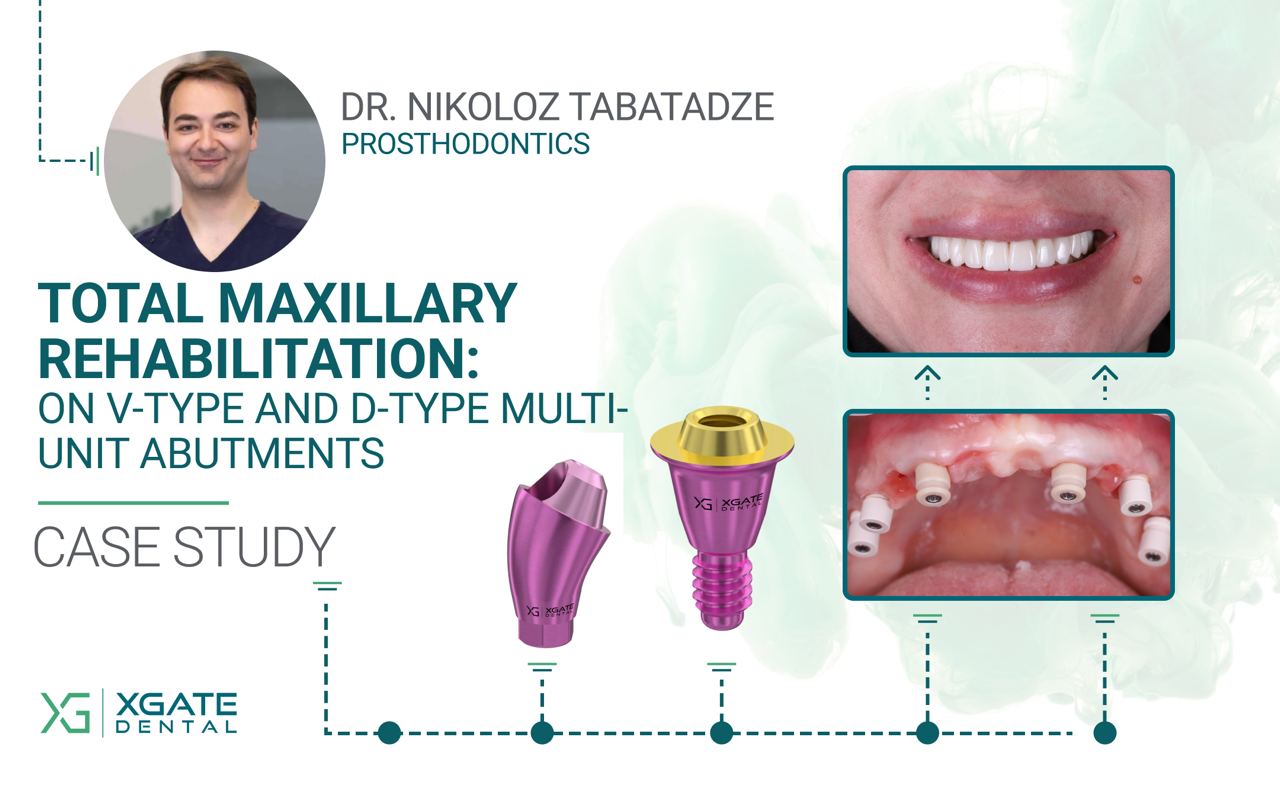
Dr. Nikoloz Tabatadze
Specialization: Prosthodontist
Work experience: 6 years
Place of work: Tbilisi, Georgia
In the doctor’s own words: “My workflow includes the use of an intraoral scanner and a microscope, which results in more accurate and faster outcomes.”
Patient summary
- Patient: Female, 42 years old.
- Medical history: Unremarkable (general health is satisfactory).
- Complaints: Aesthetic defect and impaired masticatory function (functional discomfort) in the maxillary region.
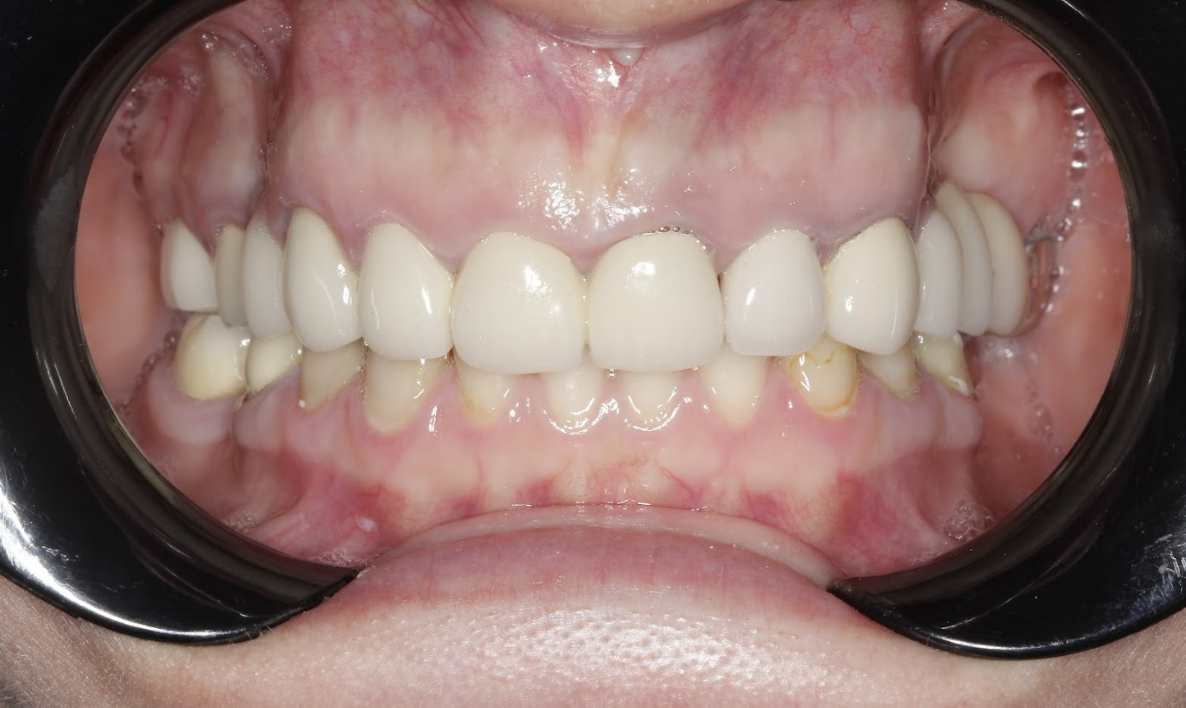
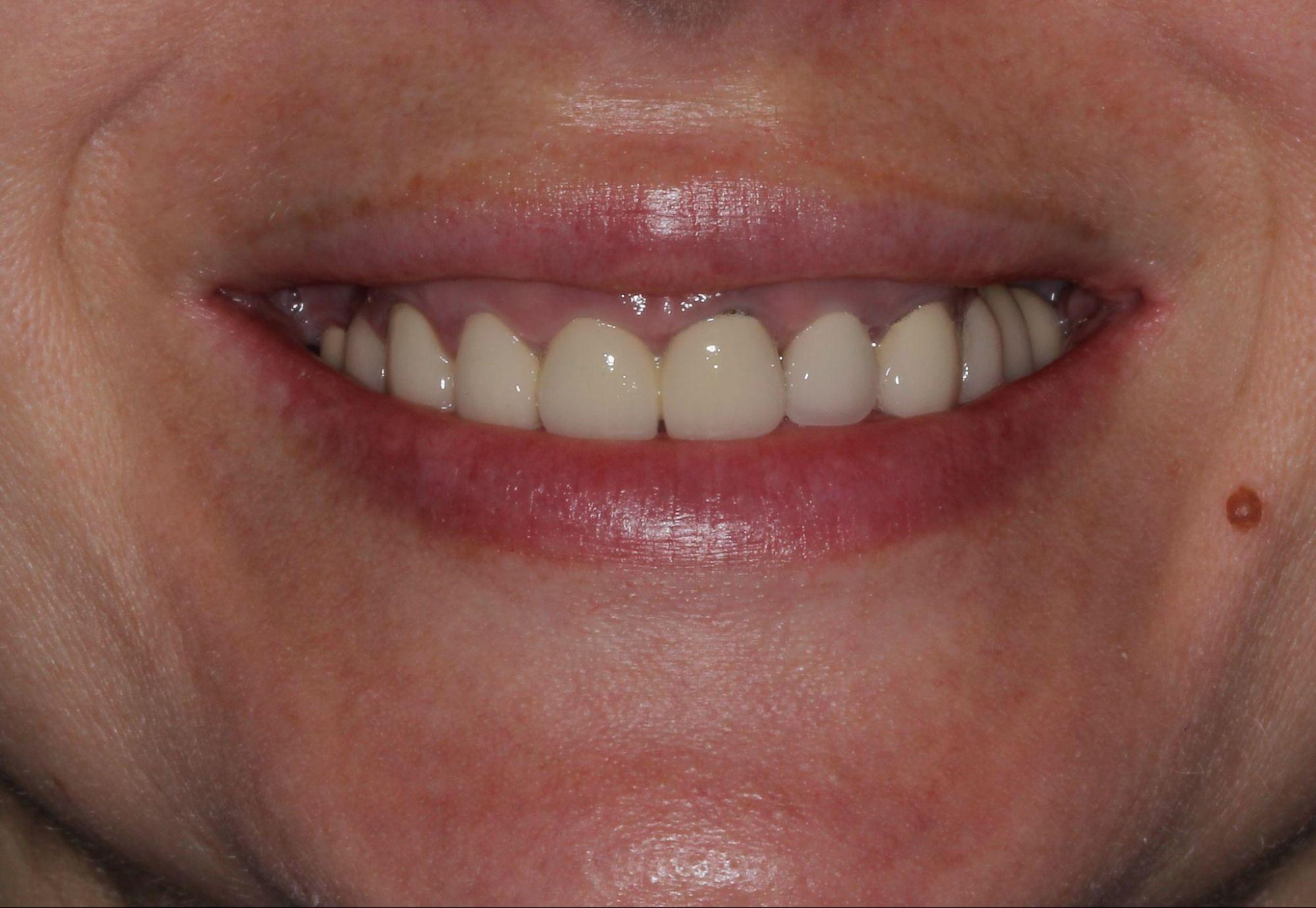
- Initial status: The initial clinical picture is shown in the images below. A ceramic prosthesis supported by the roots of vital teeth.

Diagnosis and treatment planning
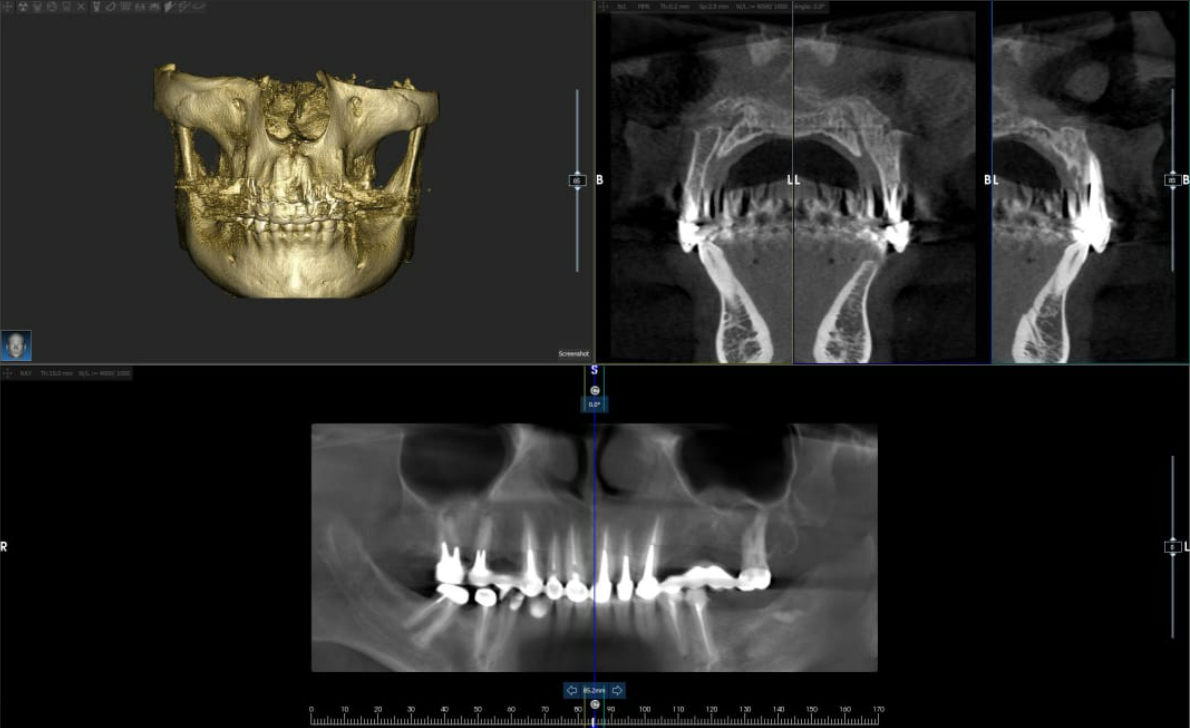
Based on mandatory CBCT imaging, a 3D model was created, which was used for guided implant surgery planning and the digital design of the prosthetic structure.
Based on the results of a comprehensive clinical and radiological evaluation, the following surgical and prosthodontic treatment plan was approved:
- Extraction of all maxillary teeth
- Bone augmentation
- Placement of 6 dental implants (positioning is shown in the pictures below)
- Fabrication of a screw-retained prosthetic structure
Surgical Stage
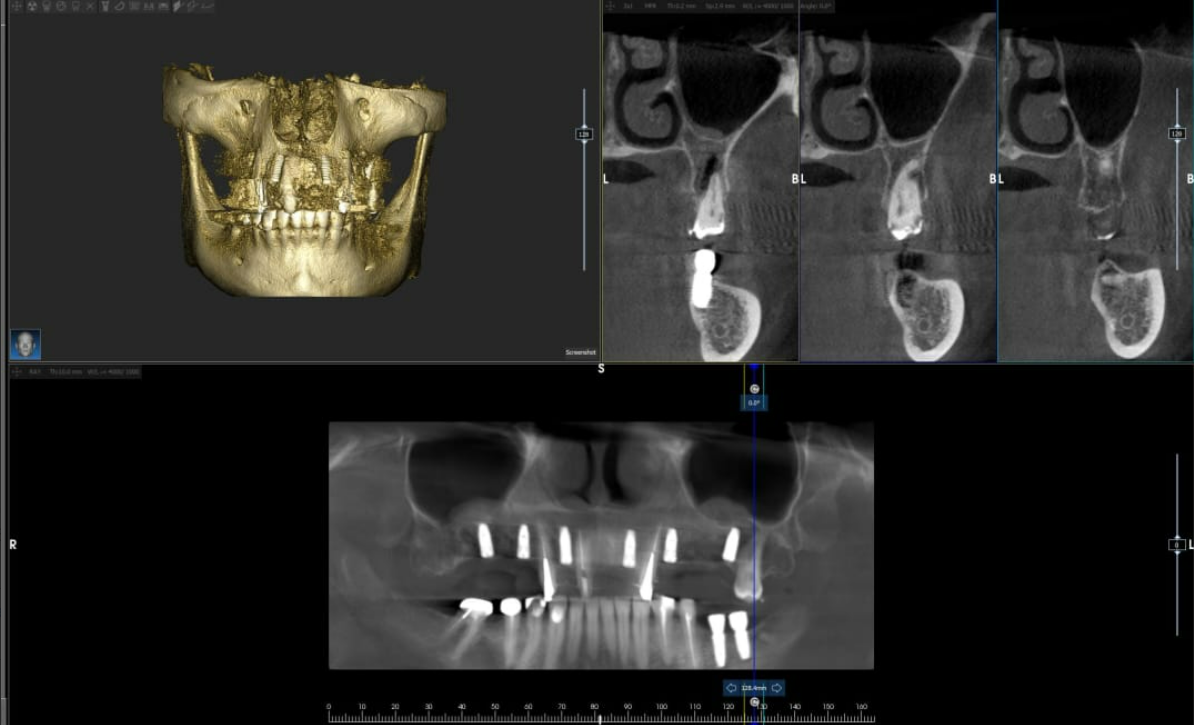
The surgical phase—tooth extraction and implant placement—was performed sequentially. X-rays show remaining natural teeth next to the placed Neobiotech Regular Platform implants. This approach is necessary for accurate occlusal registration. Furthermore, the remaining teeth can serve as support for provisional restorations if immediate loading of the implants is not clinically indicated.
Prosthetic stage and choice of superstructures
Screw retention is the optimal protocol for full-arch prosthetics supported by a limited number of implants. After being informed of possible alternative treatment plans, the patient consented to the fabrication of a screw-retained prosthetic structure on multi-unit abutments.
The success of comprehensive rehabilitation directly depends on meticulous prosthetic planning. The following multi-unit abutments were selected for this case:
- 1.6 — V-Type (straight), gingival collar height 3 mm
- 1.4 — V-Type (straight), 1 mm
- 2.4 — V-Type (straight), 1 mm
- 2.6 — V-Type (straight), 3 mm

V-Type 1 mm
V-Type 3 mm
- 1.2 — D-Type, angled 30°, 1 mm
- 2.2 — D-Type, angled 30°, 2 mm
D-Type 1 mm
D-Type 2 mm
In this clinical case, the superstructures are distributed in an unconventional manner: angled multi-unit abutments (D-Type) are placed in the anterior region, and straight ones (V-Type) in the posterior regions. This decision was dictated by the specifics of the occlusal plane formation.
Traditional protocols use the opposite approach: straight abutments are placed anteriorly and angled ones are placed posteriorly to bypass anatomical structures in cases of bone deficiency. However, in this case, bone support in the posterior regions was completely restored via augmentation.
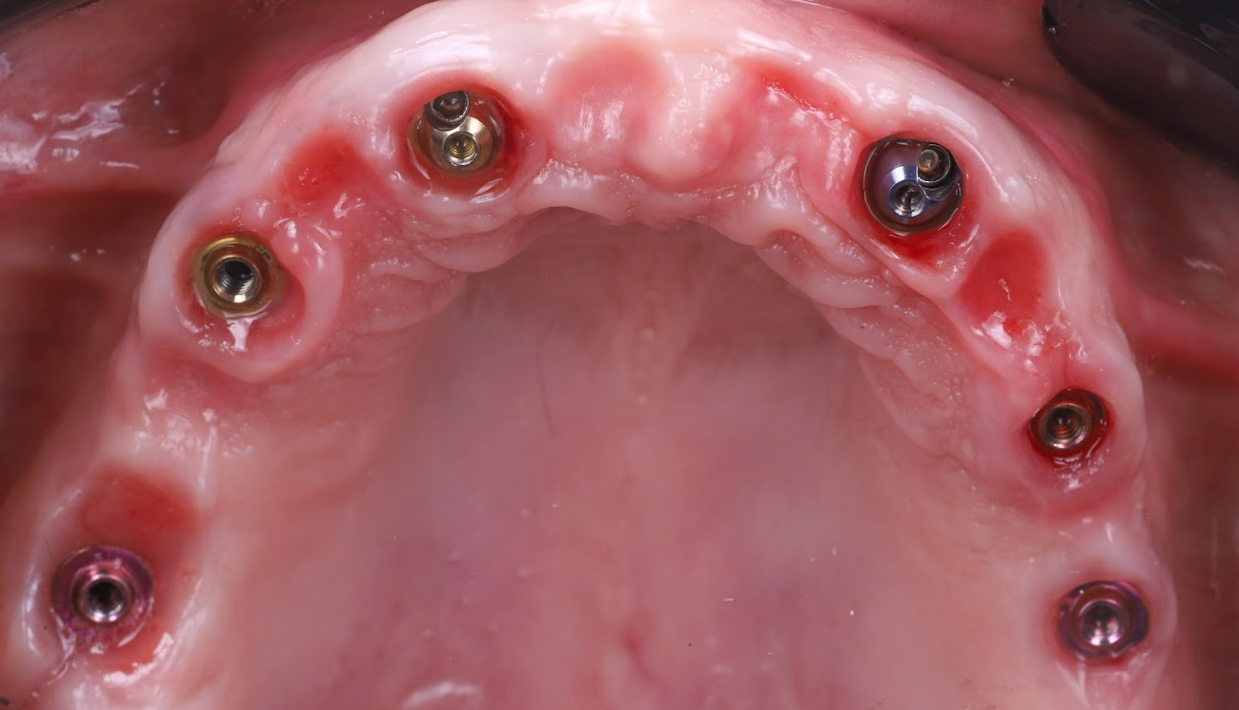
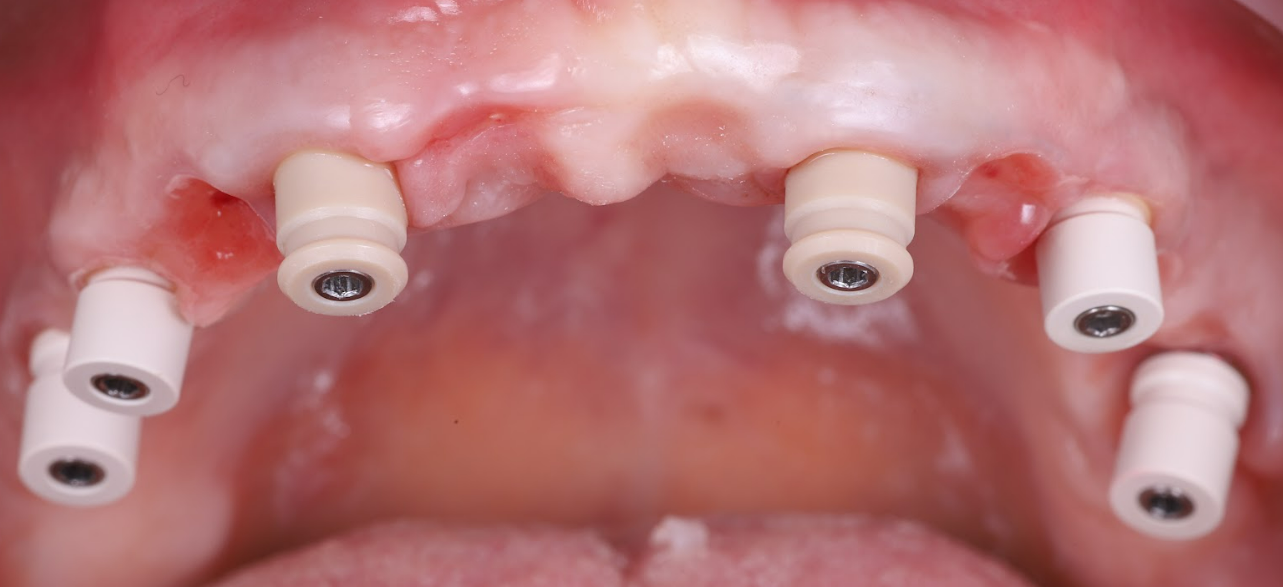
The photo below shows the healed gingiva with XGATE multi-unit abutments in place.
Design features of D-Type and V-Type superstructures
Let’s take a closer look at the clinical rationale for choosing these multi-unit abutments.
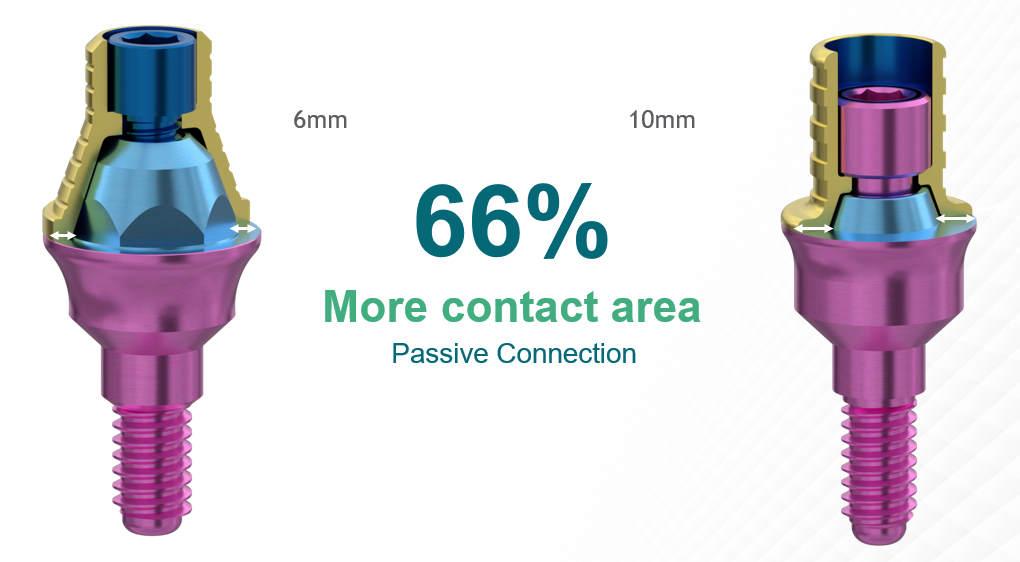
The V-Type straight abutments feature a narrow conical geometry capable of compensating for up to 40° of implant divergence. Compared to their angled counterparts, they provide superior distribution of occlusal forces due to the increased contact area between the sleeve and the restorative platform. This is particularly crucial when restoring the posterior region.
Furthermore, the V-Type design allows for a thicker zirconia framework, significantly improving the overall strength and long-term durability of the restoration.
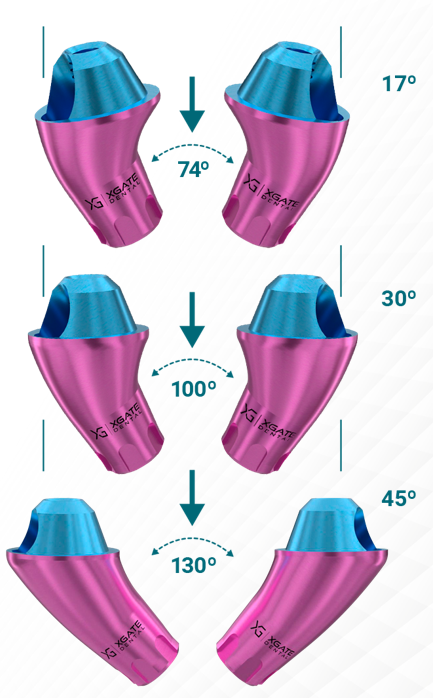
D-Type angled abutments are designed to provide reliable support and address biomechanical challenges in cases of severe implant divergence. The line includes three angulation options (17°, 30°, and 45°), allowing for the correct placement of the prosthetic screw access hole even with a total axial divergence of 74° to 130°.
This protocol utilized D-Type multi-unit abutments with a 30° angulation.
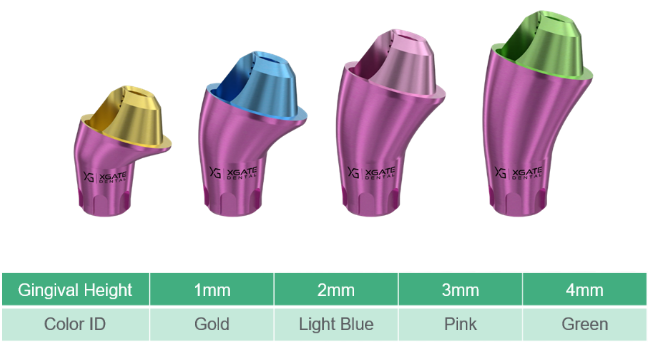
The illustration below, using D-Type abutments as an example, demonstrates the XGATE color-coding system based on gingival collar height. This ergonomic solution significantly simplifies component identification and optimizes the clinician’s workflow during prosthetic appointments.
As with all XGATE Dental restorative components, D-Type multi-unit abutments feature precision-machined interfaces and cross-compatibility with 50+ different implant systems.
This precision is critical when utilizing angled abutments. Because the force distribution vector is shifted, the biomechanical stress placed on both the abutment body and the prosthetic screw increases significantly compared to their straight counterparts.
Returning to our clinical case: we utilized a digital workflow for nearly every phase of this treatment. The accompanying image shows the scan bodies in place, ready for intraoral scanning.
Laboratory Stage: Digital Design and Verification
The next step was the CAD modeling of the prosthetic structure. To ensure manufacturing accuracy and a passive fit, we tried the framework on a 3D-printed working model created from digital scans.
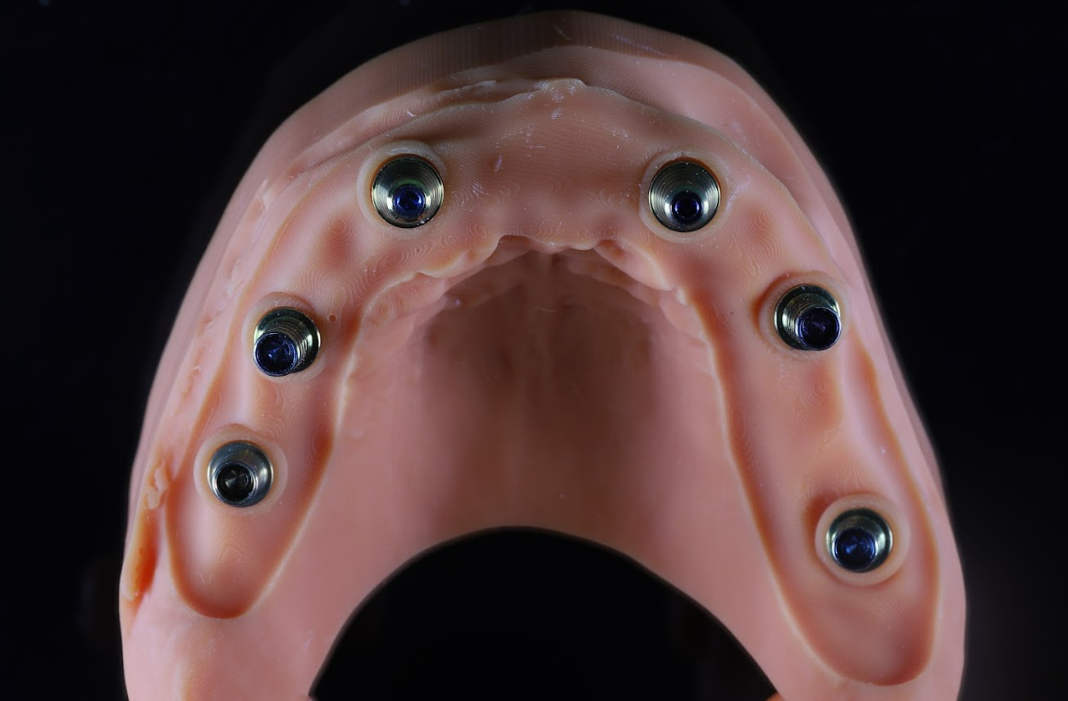
The first photo shows a printed model of the maxilla with laboratory-placed implant analogs. It is necessary to verify the passive fit of the prosthesis.
This is a critical parameter: the structure must fit completely without tension. If the framework “springs” on the model, it will create excessive pressure on the implants in the oral cavity, which will ultimately lead to their failure.
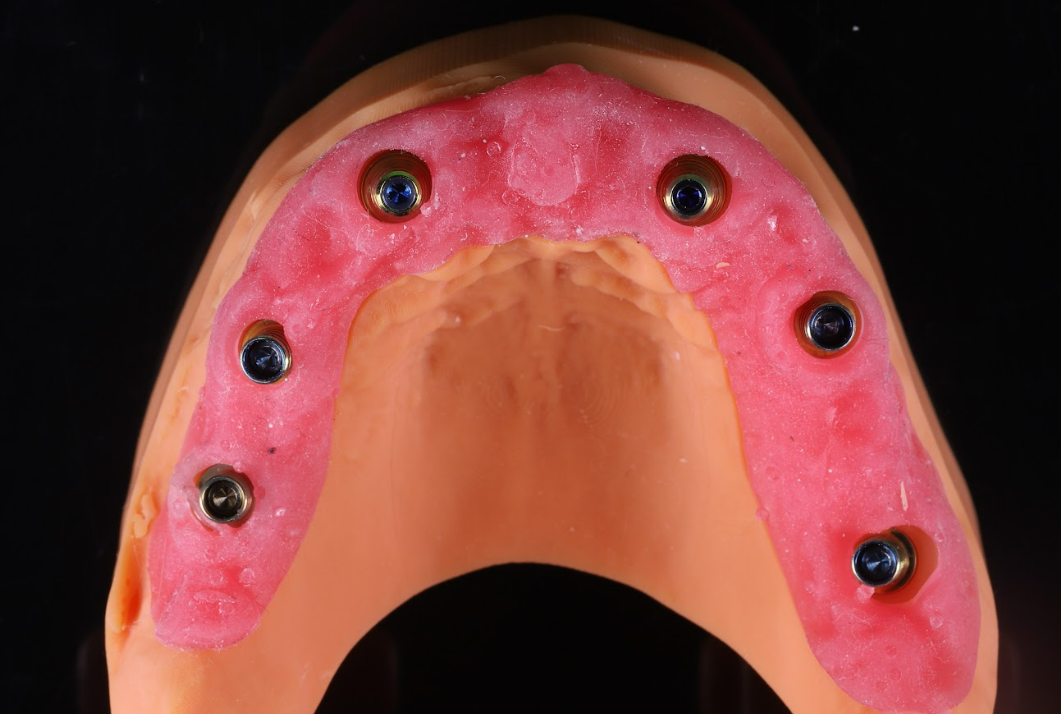
The next image shows a jaw model with a gingival mask applied. It demonstrates the boundary of the patient’s soft tissue, preventing the restoration from pressing on the gingiva and preventing food from becoming trapped underneath. This is how ideal “pink aesthetics” are created.
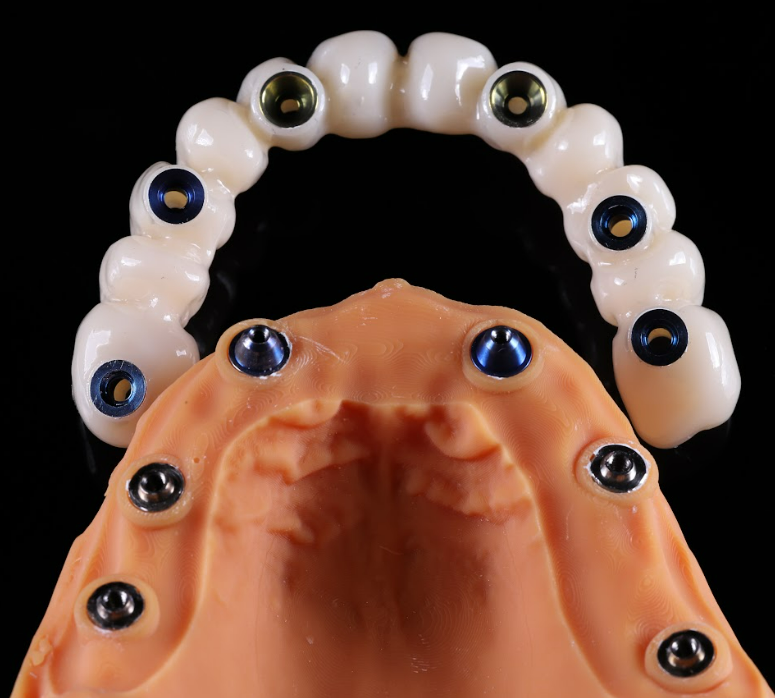
Next comes the final stage: the finished prosthesis after polishing and final inspection. Afterward, sterilization follows, after which the restoration is delivered to the patient.
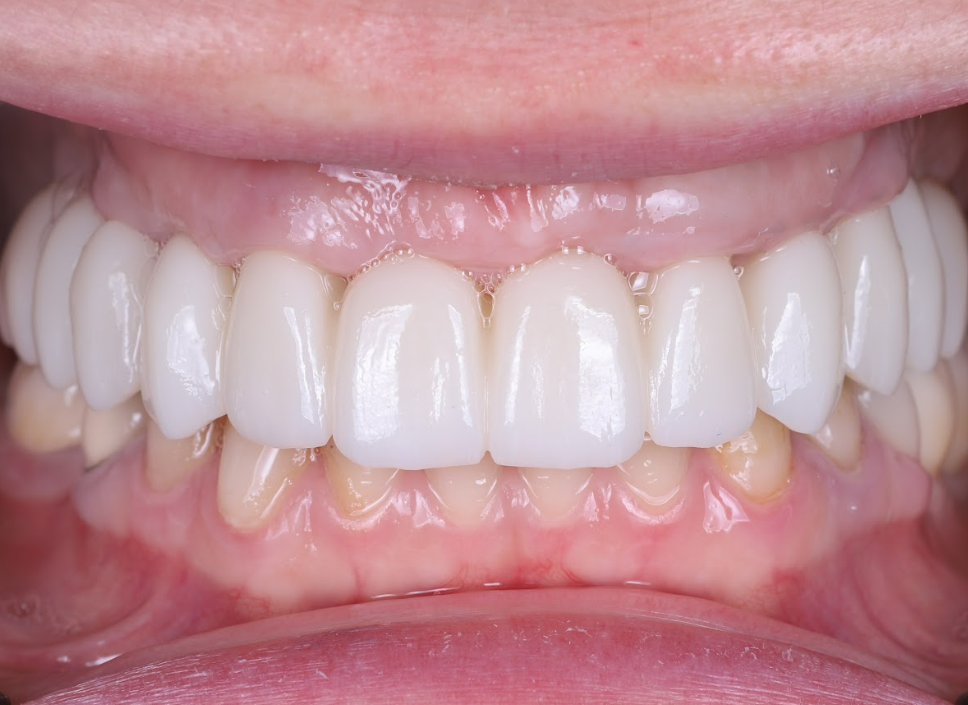
In accordance with the prosthetic rehabilitation protocol, a provisional restoration was fabricated and secured in place during the initial stage.
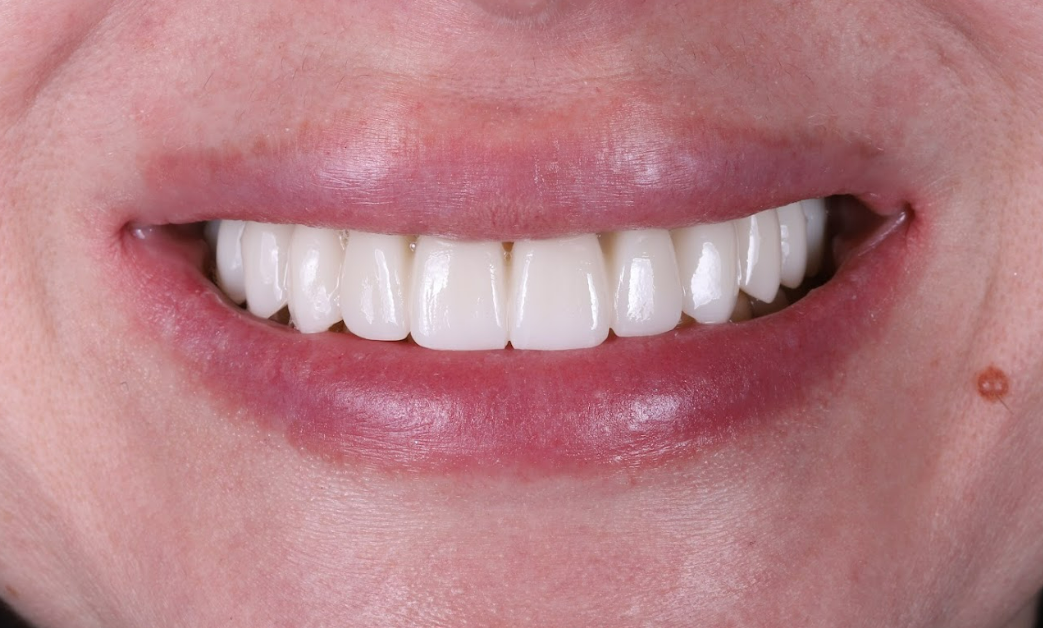
After the functional adaptation period and the final formation of the gingival profile, the provisional restoration was replaced with a permanent full-arch zirconia restoration.
XGATE Dental Products Used in Case Study
This full maxillary rehabilitation utilized 6 XGATE multi-unit abutments (4× V-Type straight + 2× D-Type angled 30°) compatible with Neobiotech Regular Platform implants, plus matching scan bodies for the digital workflow.
Download Resources
Get the complete case study and explore our product catalog
Case Study • PDF • 1.6 MB
📥 Download Case StudyProduct Catalog • Online
🔍 View Product CatalogWe hope you found this clinical case interesting. If you have any questions about the characteristics and delivery of XGATE Dental products, please contact us in any convenient way.
XGATE Dental Group GmbH
Falkensteiner Straße 77, 60322
Frankfurt am Main
Germany
E-mail: [email protected]
350 W Passaic
St Rochelle Park, NJ 07662
United States
Disclaimer: Any medical or scientific information provided in connection with the content presented here makes no claim to completeness and the topicality, accuracy and balance of such information provided is not guaranteed. The information provided by XGATE Dental Group GmbH does not constitute medical advice or recommendation and is in no way a substitute for professional advice from a physician, dentist or other healthcare professional and must not be used as a basis for diagnosis or for selecting, starting, changing or stopping medical treatment.
Physicians, dentists and other healthcare professionals are solely responsible for the individual medical assessment of each case and for their medical decisions, selection and application of diagnostic methods, medical protocols, treatments and products.
XGATE Dental Group GmbH does not accept any liability for any inconvenience or damage resulting from the use of the content and information presented here. Products or treatments shown may not be available in all countries and different information may apply in different countries. For country-specific information please refer to our customer service or a distributor or partner of XGATE Dental Group GmbH in your region.