
Contents
For today’s prosthodontist, the question of “what to make it from?” has long ceased to be rhetorical. While just 15–20 years ago the choice was limited to metal-ceramics and gold alloys, today CAD/CAM technologies have opened up access to dozens of modifications of zirconium dioxide, lithium silicates, and hybrid nanocomposites. However, along with these opportunities comes a new responsibility: a material that performs perfectly in the aesthetically important zone may fail when used on implants in the posterior region.
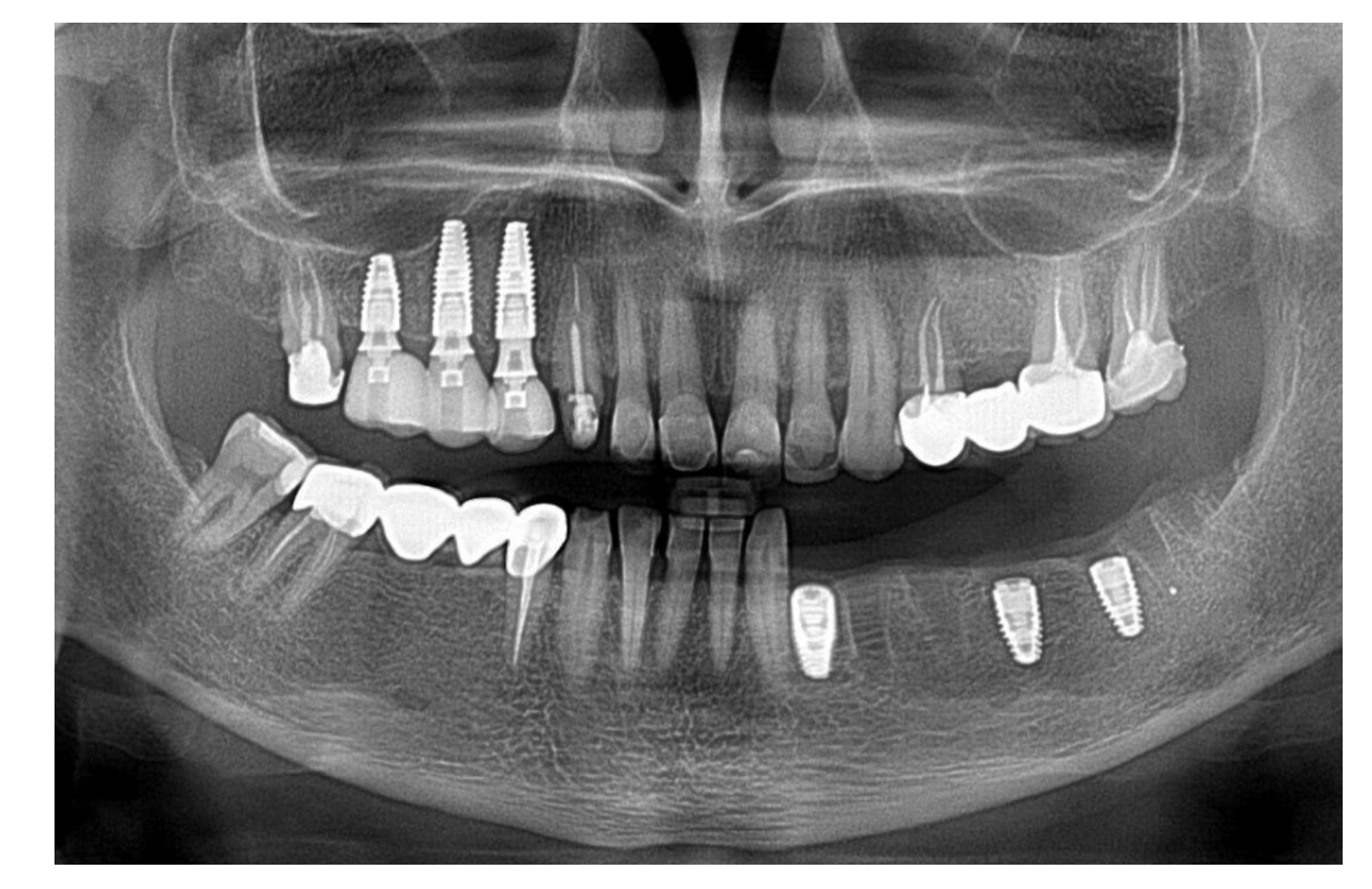
Clinical success today is not just a “beautiful crown,” but a balance between two poles:
- Mechanical survival: the ability of a structure to withstand occlusal loads of 500–800 MPa for years without causing abutment fractures or bone resorption.
- Biomimetics: optical equivalence to natural dental tissue, which should be maintained for decades, not just until the first polishing.
We will not be quoting advertising brochures. The purpose of this review is to provide practitioners with an objective guide to the physical and chemical properties of materials. We’ll explore why the “strongest” zirconia is sometimes inferior to “brittle” ceramics, how the type of superstructure affects the life of the prosthesis, and which material to choose for full-mouth rehabilitations during the adaptation phase.
Ultimately, choosing the right material is the doctor’s insurance against claims and the key to a predictable outcome, where strength figures from reference books (which we’ll discuss in detail below) translate into years of comfortable prosthetic service.
Why Zirconia Is the “Gold Standard” of Our Time
Until recently, zirconium dioxide was perceived solely as a “white metal” — a durable but lifeless, opaque framework that required veneering. Today, the situation has changed radically. Zirconia has undergone a rapid evolution, transforming it from a compromise solution into an uncompromising market leader.
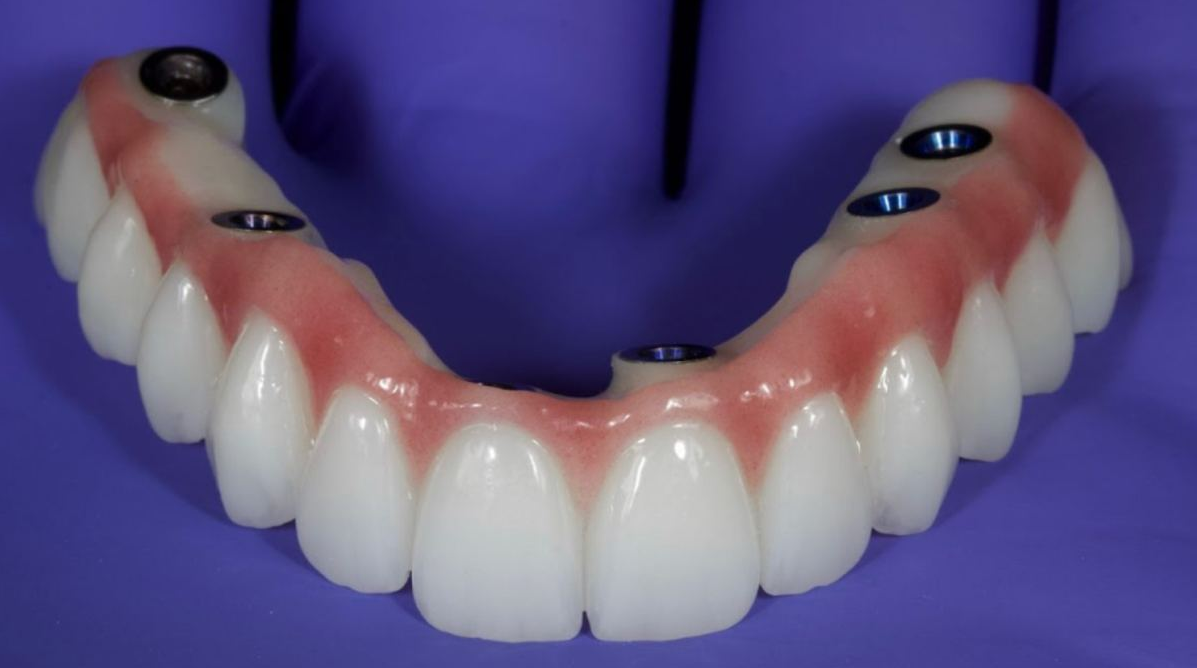
Full-arch restoration supported by five zirconia implants.
Evolution of generations: from durability to aesthetics
The development of the material has been carried out by controlling its microstructure and adding yttrium oxide (Y₂O₃) to stabilize the crystal lattice:
- 3Y-TZP (first generation): classic high-strength zirconia (flexural strength >1000 MPa). It has high opacity, making it primarily used as a framework material or for posterior monolithic restorations, where functionality is more important than appearance.
- 4Y-PSZ / 5Y-PSZ (new generations): increasing the yttrium content has allowed for the creation of “multilayered” zirconia. Here strength is slightly compromised in favor of translucency, making them visually indistinguishable from natural enamel. The gradient of color and translucency in a single block allows the clinician to create restorations in the aesthetic zone without the risk of ceramic chipping.
Long-term benefits
Zirconia has secured its “gold standard” status thanks to two factors that are critical for implant applications:
- Biocompatibility and hygienic properties: the zirconium dioxide surface has a minimal Surface Free Energy (SFE), making it highly bioinert — bacterial biofilm forms on it much more slowly than on titanium or gold alloys. This allows for the formation of a healthy and stable gingival contour around the prosthesis. If there are no signs of inflammation, this ensures the longevity of the entire structure.
- The Prettau (monolithic zirconia) concept: the transition to fully anatomical (monolithic) structures has completely eliminated the main problem of the past — chipping (fracture of the veneering ceramic). Monolithic zirconia does not delaminate, does not wear out, and maintains occlusal precision for years.
Disadvantages and risks
Despite its leading position, the material is demanding in terms of detail. The main risk arises from errors during milling and sintering, which can lead to internal stress. Zirconia’s high modulus of elasticity is a double-edged sword. On the one hand, it allows for the creation of long-span bridge structures that remain stable under load. On the other hand, the absence of plastic deformation makes it uncompromising in terms of fit accuracy. While metal can “forgive” micron-scale abutment errors due to its elasticity, rigid zirconia accumulates internal stress during a non-passive fit. This often leads to catastrophic fractures in the cervical region, highlighting the critical importance of using precision original superstructures.
Clinical scope of application
Today, zirconia is indispensable in the following scenarios:
- Long-span bridges (due to the highest bending resistance), but only if a passive fit is maintained.
- Restorations in the posterior region in cases of severe bruxism.
- Implant-supported prostheses in cases of limited interocclusal space, where it is necessary to achieve maximum strength with minimum wall thickness.
Lithium Disilicate Glass-Ceramics (e.max and Similar)
If zirconium dioxide is the “armor” of modern dentistry, then lithium disilicate is its “artificial enamel.” The advent of this material revolutionized aesthetic restorations, allowing dentists to move beyond the compromise between beauty and durability.
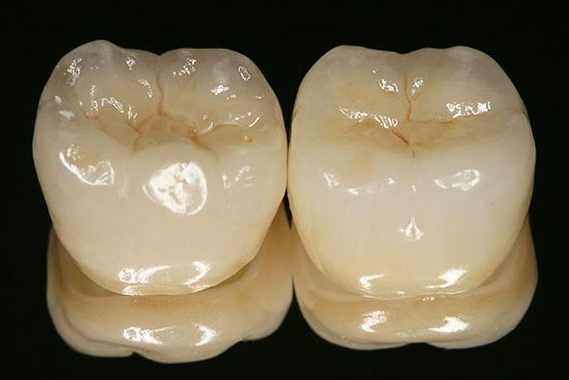
Sample of e.max lithium disilicate crowns.
Optical properties: the magic of translucency
The main advantage of glass-ceramics is their optical properties. Unlike zirconia, which even in multilayered versions has a certain degree of opacity, lithium disilicate possesses:
- True translucency: light penetrates deep into the material and is scattered in the same way as in natural tooth tissue.
- Opalescence: the ability to change shade depending on the angle of illumination, which is critically important in the aesthetically significant zone (the anterior teeth).
This makes e.max the benchmark for creating veneers and crowns that are indistinguishable from adjacent natural teeth, even under professional lighting.
Mechanical properties: the principle of biomimetics
In terms of numbers, lithium disilicate has a lower strength than zirconia (approximately 400–500 MPa versus 1000+ MPa). However, it has another strategic advantage: its elastic modulus.
The elasticity of glass-ceramics is much closer to the elastic modulus of natural tooth enamel. This allows the structure to work synergistically with tooth tissue rather than in conflict with it. Under chewing load, glass-ceramics distribute pressure more physiologically, reducing the risk of stress on underlying tissues or cement lines.
Long-term data and survival
Clinical observations (up to 10–15 years) show impressive results for single-tooth crowns. The survival rate of e.max in the posterior and anterior regions is comparable to that of zirconia, and it often surpasses it in terms of color and surface gloss retention. Thanks to the adhesive cementation process, these restorations become one with the tooth, minimizing the risk of microleakage.
Limitations: where the possibilities end
Despite all its advantages, glass-ceramics have clear application limits:
- High occlusal loads: in patients with severe bruxism or masticatory muscle hypertrophy, the risk of glass-ceramic fracture in the posterior region is significantly higher than that of monolithic zirconia.
- Bridges: lithium disilicate is not recommended for long-span restorations. The maximum acceptable option is a three-unit bridge in the anterior region (extending to the premolar), but even here dentists tend to favor more rigid frameworks.
- Masking discolorations: the high translucency of the material becomes a problem when it is necessary to cover a severely discolored tooth preparation or a metal abutment. In such cases, special opaque subtypes (HO/MO blocks) are required, which somewhat reduces the overall aesthetics.
Polymeric and Nanohybrid Composites (CAD/CAM PMMA & Composites)
In traditional dentistry, polymers were long considered a mere “transitional step.” However, with the development of high-temperature molding in factory settings (pressure polymerization), CAD/CAM blocks made of PMMA and composites have become full-fledged players, occupying their own unique niche.
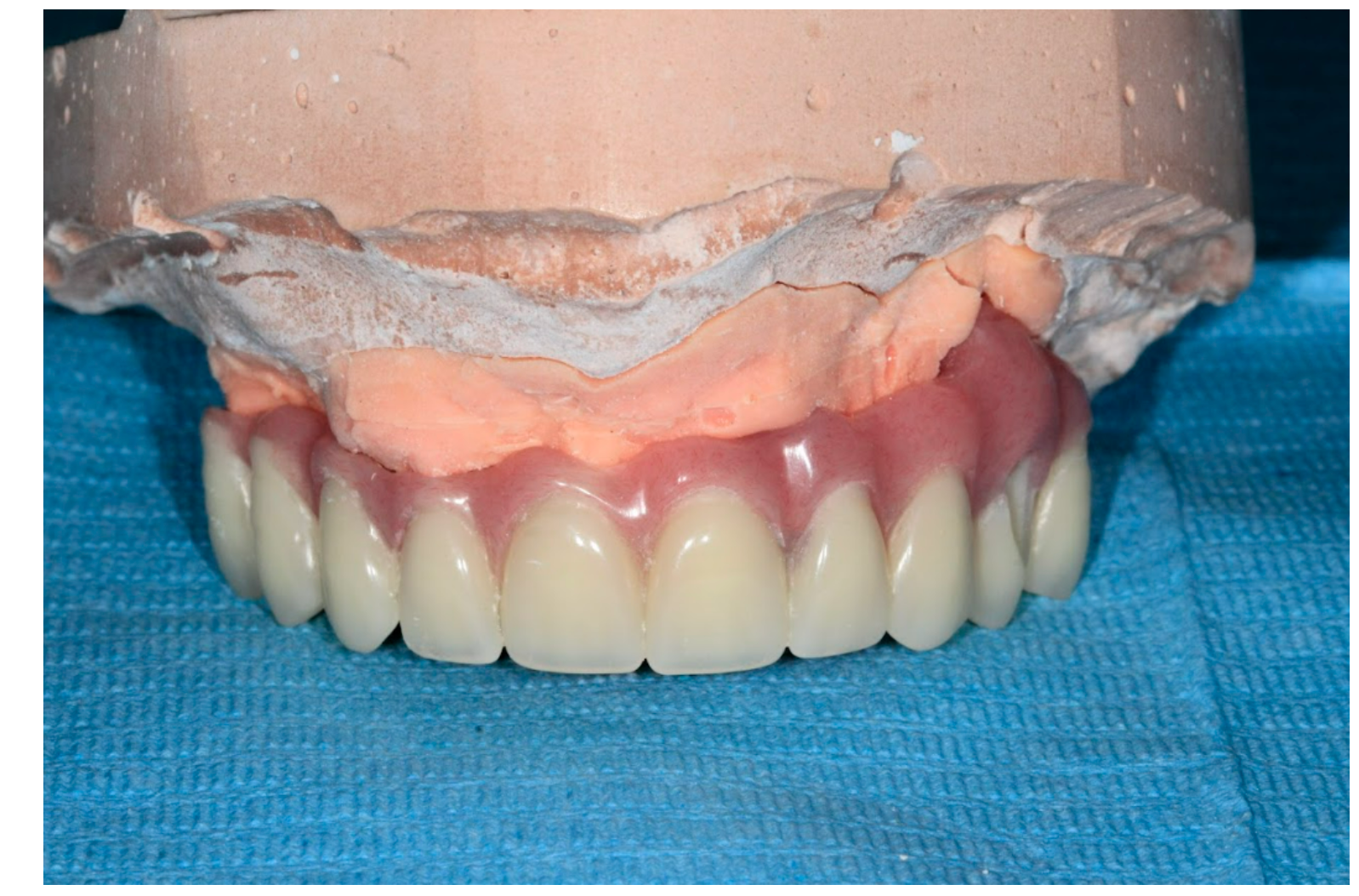
Full-arch restoration using 3D-printed PMMA.
Role in the modern protocol: from temporary solutions to long-term shock absorption
Modern PMMA is not the self-curing acrylic used previously. It is a high-density material with no residual monomer, because it is first polymerized at high temperatures and the crowns are milled from solid PMMA blocks on the same machines used to make zirconia prostheses.
Today it is used not simply to keep the patient from walking around toothless, but as a tool for functional adaptation. It is indispensable in full-mouth rehabilitations, when the new vertical dimension of occlusion and mandibular position need to be verified over several months before moving on to zirconia.
Advantages: repairability and the cushioning effect
- Shock-absorbing effect: this is perhaps the main clinical advantage of composites. Unlike the absolutely rigid zirconia, composite has an elastic modulus close to that of bone and dentin. It acts as a shock absorber, dampening impact loads. This is critically important in implant-supported restorations (especially in full-arch 4/6 protocols), as the absence of a periodontal ligament makes the implant-bone system very sensitive to heavy impacts.
- Perfect milling accuracy: polymers are more pliable during machining. This allows for milling crown margins with micron precision, achieving the perfect marginal fit that is sometimes difficult to obtain with fragile ceramics.
- Repairability: if a chip occurs during use, it can be repaired directly in the chair using a regular light-curing composite.
Disadvantages: the downside of plasticity
- Wear rate: composite is softer than enamel and ceramic. Over time the cusps wear away, which can lead to a loss of the desired vertical dimension of occlusion after prolonged wear (more than 1.5–2 years).
- Discoloration and plaque: despite their high density, polymers are more porous than ceramics. They are prone to the accumulation of food pigments and plaque, requiring impeccable hygiene.
- Material aging: when exposed to the humid environment of the oral cavity, the polymer matrix gradually degrades, which limits the service life of such structures.
Clinical niche
- Adaptive prostheses: the stage between implantation and permanent prosthetics.
- Hybrid dentures (full-arch 4/6): use of composite veneers on a metal or titanium framework to reduce the load on the implants.
- Protective occlusal guards and splints: created digitally, they offer significantly greater precision and wear resistance.
Comparison Table (Clinical Benchmarking)
To help you systematize your choice, we’ve compiled the key material characteristics into a single table. This data is based on averaged clinical studies and the technical data sheets of leading manufacturers.
| Comparison parameter | Zirconia (monolithic / multilayered) | Glass-ceramics (LiSi₂ / e.max) | CAD/CAM composites / PMMA |
|---|---|---|---|
| Bending strength (MPa) | 800–1200+ (highest) | 360–500 (average) | 150–250 (low) |
| Aesthetic index | ★★★★☆ (high, but inferior in opalescence) | ★★★★★ (standard, imitates enamel) | ★★★☆☆ (good at first, fades over time) |
| Modulus of elasticity (GPa) | ~210 (very hard, like steel) | ~70 (close to tooth enamel) | ~10–15 (close to dentin and bone) |
| Retention type | Cement or screw | Predominantly adhesive — ideal fit, no cement contact with soft tissues, but harder to implement (requires etching) | Screw, less often cemented (temporary / long-term) |
| Compatibility with screw retention | The highest — maintains the integrity of the screw access hole perfectly and does not chip when tightening the screw | Limited — risk of chipping at the edge of the screw access hole under high loads | High — optimal for the adaptation period |
| Survival rate (5 years) | 98% (extremely high) | 95–97% (high with proper selection) | 70–80% (requires replacement or correction) |
| Survival rate (10 years) | 92–95% (leader in the posterior region) | 85–90% (excellent for single crowns) | Not recommended for continuous use |
A brief guide for the clinician:
- If you need strength and hardness: choose zirconia. It is forgiving of long pontic spans in bridges and of insufficient framework thickness.
- If you’re looking for beauty: choose lithium disilicate. Adhesive bonding allows the restoration to become part of the tooth, making it ideal for veneers.
- If adaptation is needed: choose composites. They absorb loads (the cushioning effect), which is critical for patients with muscle dysfunction or immediately after implant placement.
Synergy of Material and Superstructure: A Manufacturer’s Perspective
Choosing the most expensive and durable material — whether premium zirconia or aesthetic lithium disilicate — can be compromised by a mistake when selecting the superstructure. In digital dentistry, the prosthetic material and abutment must be considered as a single biomechanical system.
The importance of the interface: precision vs. stress
As we’ve already established, zirconium dioxide is extremely hard and has virtually no elasticity. This means it is unforgiving of even micron-scale deviations in abutment geometry.
- Original abutment structures (XGATE Dental): manufactured to tight tolerances, ensuring a precise fit. When the zirconia crown fits perfectly on the abutment, chewing forces are distributed evenly across the entire contact area.
- Risks of inaccuracy: if there is a micro-gap in the connection, the load is concentrated at one point. In a rigid material, this inevitably leads to the formation of microcracks, which over time develop into catastrophic fractures in the thinnest part — the screw neck or screw access channel.
The V-Type multi-unit abutments with a reduced taper deserve special attention. This design allows for increased restoration thickness at the prosthesis/abutment junction, reducing the risk of cracks and fractures.
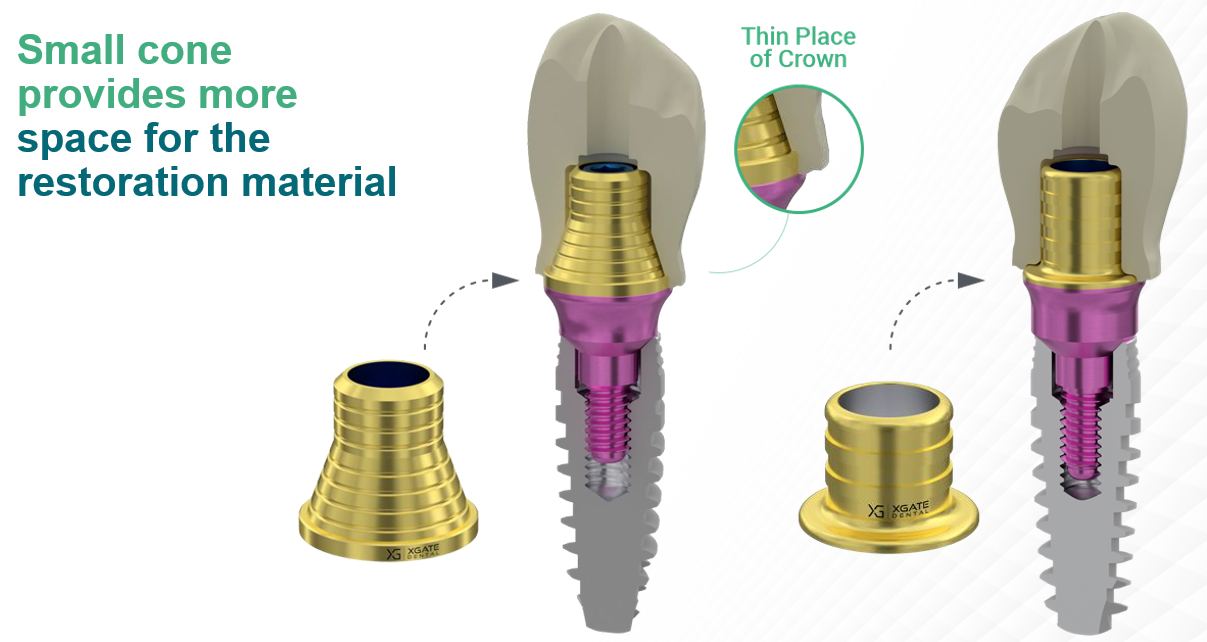
A reduced-taper cone leaves more space for restorative material at the vulnerable crown margin.
The reduced taper also allows for compensation of the deviation angle between implants of up to 40°.
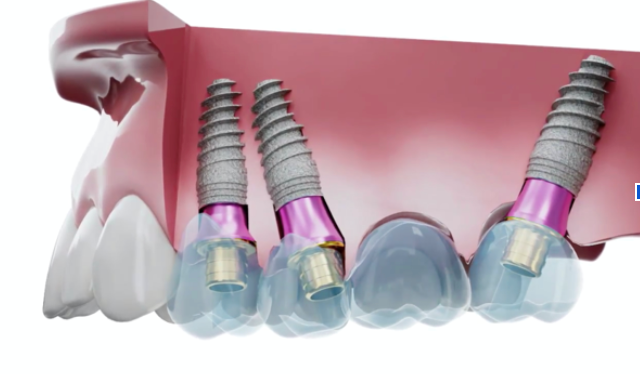
Angled abutments compensate for implant divergence of up to 40°.
Screw retention: the standard of safety and convenience
In modern practice, screw retention is becoming a priority, and material selection plays a crucial role. XGATE Dental’s screw-retained components enable the most effective implementation of the screw-retained restoration concept:
- Prevention of “cement disease”: screw retention completely eliminates the ingress of cement residues into the subgingival space, which is the main prevention strategy for peri-implantitis.
- Marginal seal: the perfect fit between the abutment platform and the internal geometry of the zirconia framework ensures a sealed connection that prevents bacterial colonization within the screw access channel.
- Passivity of fit: when using bridge structures on multiple implants, it is the precision of the superstructures that ensures the absence of stress in the framework when tightening the screws.
Material protection through CAD/CAM precision
Modern protocols require precision at every stage. Using manufacturer libraries with verified parameters allows for milling the abutment seat with a perfect marginal fit. This is especially important for glass-ceramics (e.max), where the thin margins are most vulnerable to chipping.
Section summary: the durability of zirconia and the aesthetics of ceramics are just the tip of the iceberg. The foundation lies in the precision of the superstructure interface. Investing in high-quality components (such as the XGATE Dental line) is the only way to ensure that the material’s physical properties are fully realized and do not lead to failure due to mechanical conflict.
Conclusion
The era of standardized solutions, where a single material was used for all clinical cases, is gone forever. Today, the success of prosthetics depends on the doctor’s ability to meticulously select the right material for the specific task, taking into account not only the patient’s aesthetic preferences but also the biomechanics of the entire system.
What to choose
- Zirconia remains the “gold standard” for posterior teeth, long-span bridges, and implant work where maximum reliability and biological inertness are required.
- Glass-ceramics (e.max) are the undisputed leaders in the aesthetically significant area, allowing for complete optical integration with natural teeth.
- Composite materials are an indispensable tool for adaptation, full-mouth reconstruction, and load absorption in complex protocols.
However, it is important to remember: any material, even the most perfect, remains a “semi-finished product” until it is connected to a support. The use of precision superstructures and digital protocols is not a luxury, but a technical necessity. Only by ensuring a passive fit and precise interface can we guarantee that the physics of the material will work for us, not against us.
Development forecast: gradient is the future
The industry is moving toward even greater biomimetics. The future lies in gradient materials, where, in a single piece, the strength of zirconia at the base will seamlessly transition to the aesthetics of glass-ceramic at the incisal edge. We are on the verge of materials that will not simply imitate teeth, but completely replicate their elastic modulus and wear resistance.
For clinicians, this means one thing: constantly updating their knowledge and tools. By choosing proven components and understanding the physics of materials, we provide our patients with results that will last for decades.
Sources
- MDPI Biomimetics (2025): a retrospective study showed that after five years the cumulative survival of zirconia was 94% and that of lithium disilicate 89%. Zirconia demonstrates better mechanical reliability in the occlusal areas, while lithium disilicate has an advantage in the aesthetics of the anterior group.
- ResearchGate: Comparative Evaluation (2025): a randomized study of 240 patients confirmed that zirconia has a lower incidence of fractures and chipping, especially on molars.
- Journal of Dentistry (ScienceDirect): a 10-year follow-up of lithium disilicate structures confirms their reliability, although the risk of chipping of the veneering ceramic remains relevant.
Use of composites
Composites are more often considered in the long term as a material for temporary structures or adhesive bridges (FRC):
- PMC: Clinical Performance of Long-Term Temporary FDPs: a study of composite prostheses showed a high incidence of debonding (18.1%) and fractures (14.1%) within the first year, making them less reliable for permanent prosthetics than ceramics.
- ResearchGate: Fiber-Reinforced Composite vs. Zirconia (2025): a comparison of cantilever prostheses over 36 months showed a high survival rate for both types (about 97%), but composites more often require correction due to wear.
Zirconia: monolithic vs. bilayered
- PMC: Revolution of Current Dental Zirconia (2022): a review of the evolution of zirconia indicates that monolithic structures significantly reduce the number of mechanical complications (ceramic chips), which were the main problem of early generations of zirconia-ceramic prostheses.
- Springer Link (2023): a comparison of monolithic and veneered zirconia confirms that bilayered structures suffer from delamination more often.
Don’t let a flawed foundation compromise your premium restorations. The precision of the superstructure interface is the true foundation of long-term clinical success. Unlock the full potential of zirconia and glass-ceramics with the XGATE Dental line.
Disclaimer: Any medical or scientific information provided in connection with the content presented here makes no claim to completeness and the topicality, accuracy and balance of such information provided is not guaranteed. The information provided by XGATE Dental Group GmbH does not constitute medical advice or recommendation and is in no way a substitute for professional advice from a physician, dentist or other healthcare professional and must not be used as a basis for diagnosis or for selecting, starting, changing or stopping medical treatment.
Physicians, dentists and other healthcare professionals are solely responsible for the individual medical assessment of each case and for their medical decisions, selection and application of diagnostic methods, medical protocols, treatments and products.
XGATE Dental Group GmbH does not accept any liability for any inconvenience or damage resulting from the use of the content and information presented here. Products or treatments shown may not be available in all countries and different information may apply in different countries. For country-specific information please refer to our customer service or a distributor or partner of XGATE Dental Group GmbH in your region.