
This clinical case is provided by Dr. Luca Laloè.
Dr. Laloè is the founder and director of three successful clinics: a practice in Naples on Corso Maria Cristina di Savoia, a clinic in Somma Vesuviana, and a center in Milan specializing exclusively in oral surgery and implantology. Over the years, he has accumulated extensive clinical experience: he has performed over 7,400 surgical extractions and placed approximately 7,000 dental implants using the most modern rehabilitation protocols.
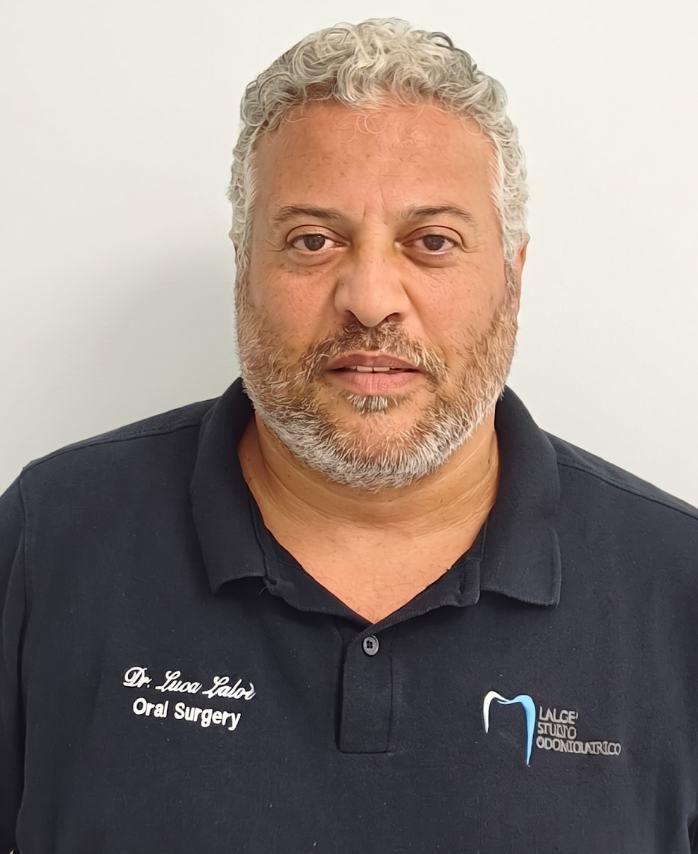
Dr. Luca Laloè
Graduated from the School of Dentistry and Dental Prosthetics at the University of Naples “Federico II” in 2004.
Specialisation: Implantology, Prosthodontics,
and Guided Surgery
Work experience: 22 years
Place of work: Naples, Italy
Today, the doctor places particular emphasis on advanced guided surgery techniques in his practice. He also continues to actively utilize traditional free-hand techniques, rightly considering them a core foundation of a surgeon’s professional skill and an essential tool for a significant number of clinical cases.
Patient summary
The patient is 56 years old.
Her general health is good, but she has severe dental issues that affect both her masticatory function and the aesthetics of her smile.
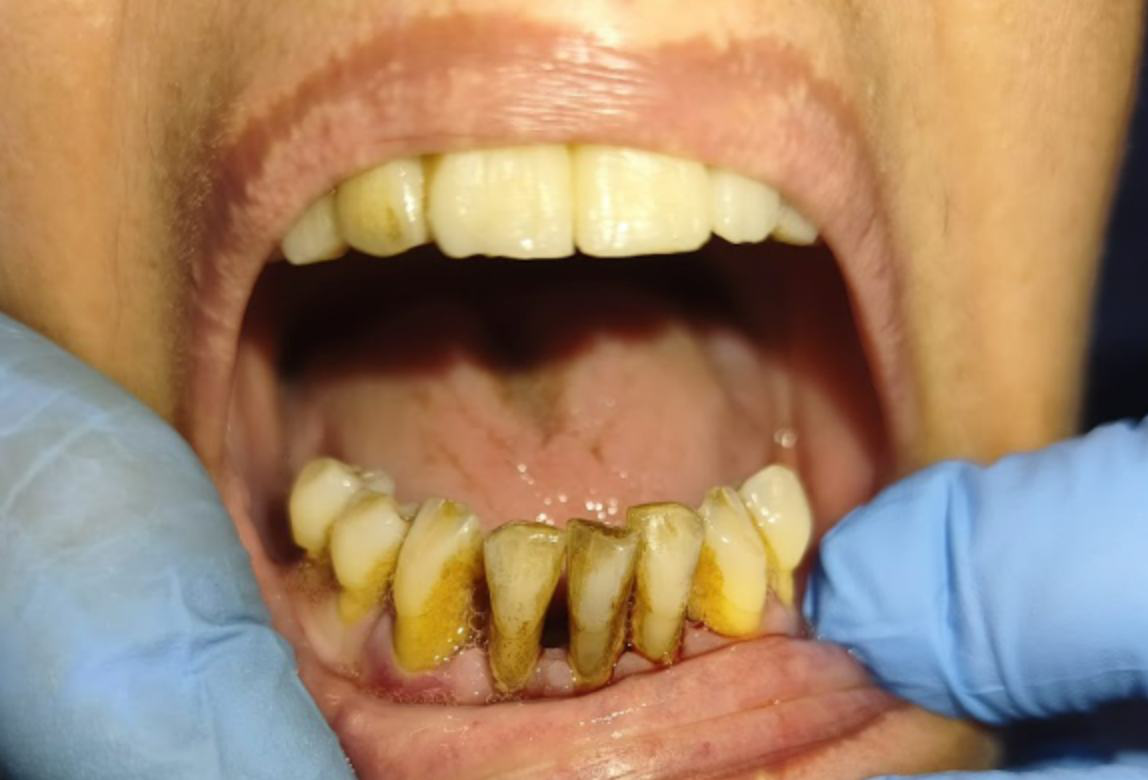
Initial clinical situation before treatment.
Prior to treatment, initial diagnostics were performed:
- CBCT of both jaws, including the surrounding tissues.
- Intraoral digital scanning.
By merging the DICOM and STL files, a consolidated 3D model was obtained for the digital planning of the implant positions in specialized software (see illustrations below).
Following a comprehensive analysis of the patient’s clinical picture, a personalized treatment plan was developed: full-arch prosthetic rehabilitation of the maxilla and mandible using the full-arch 6 protocol.
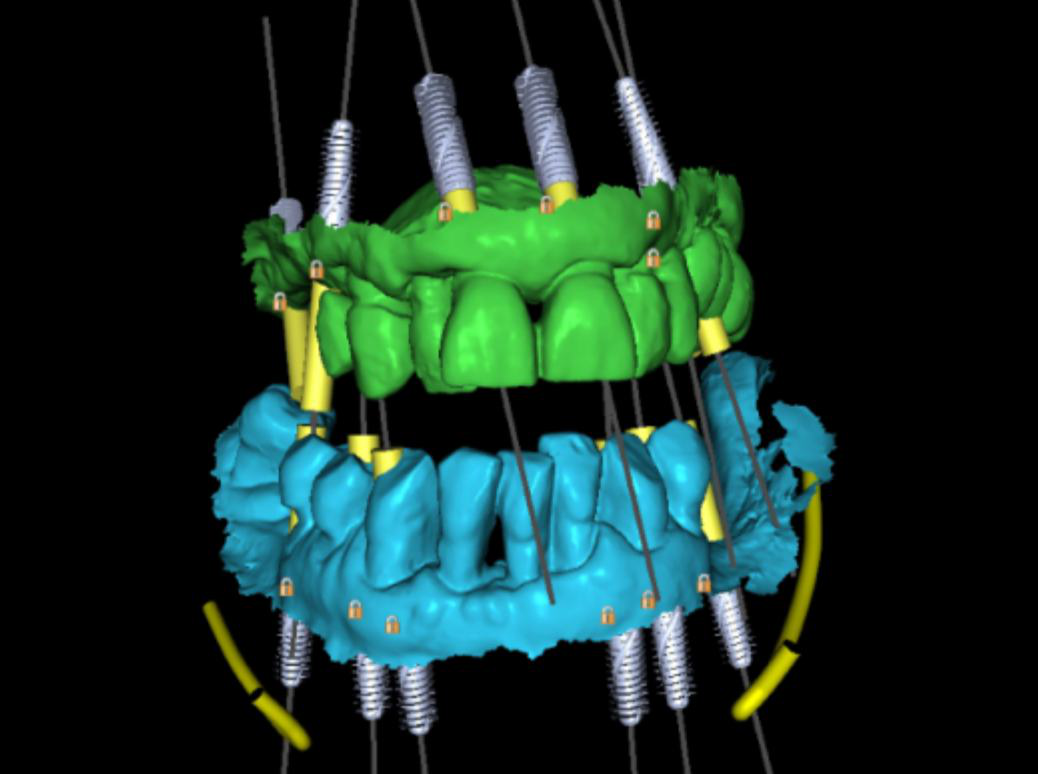
Consolidated 3D model of both jaws used for digital planning.
Digital planning
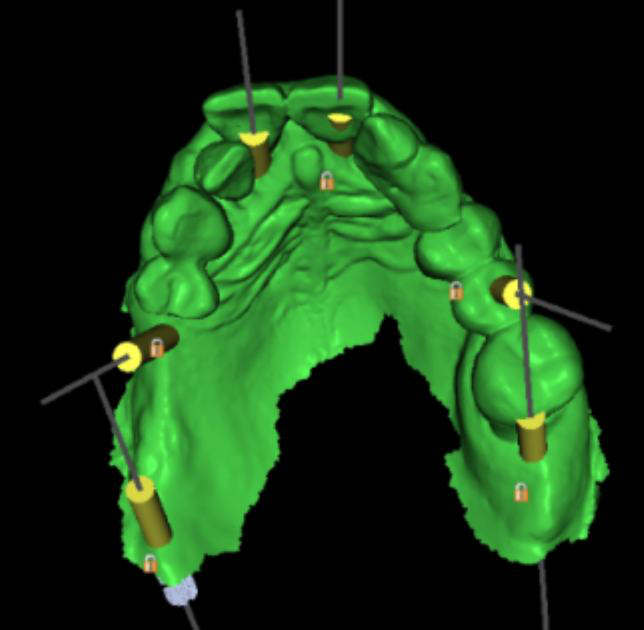
Planned implant positions — maxilla.
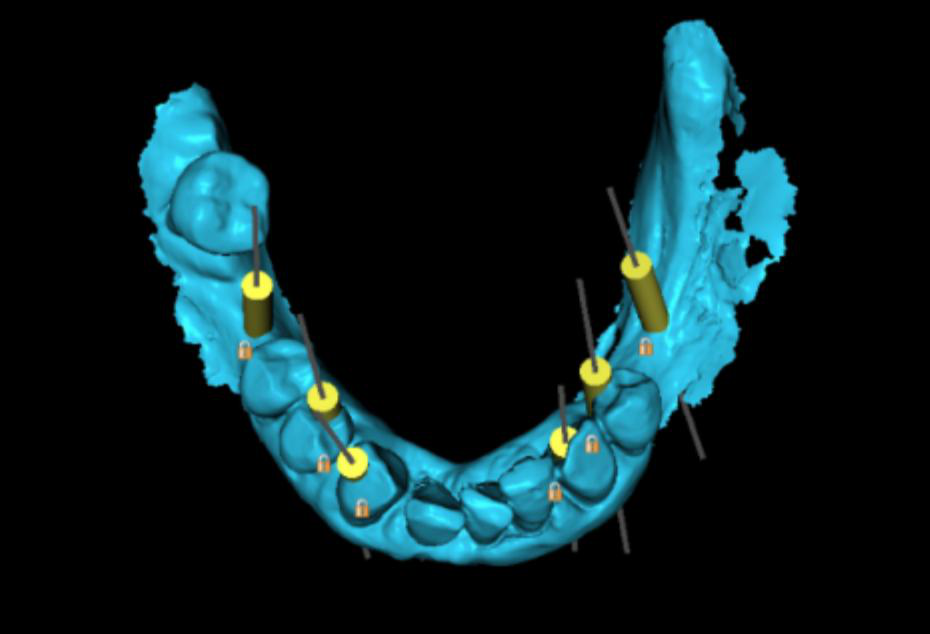
Planned implant positions — mandible.
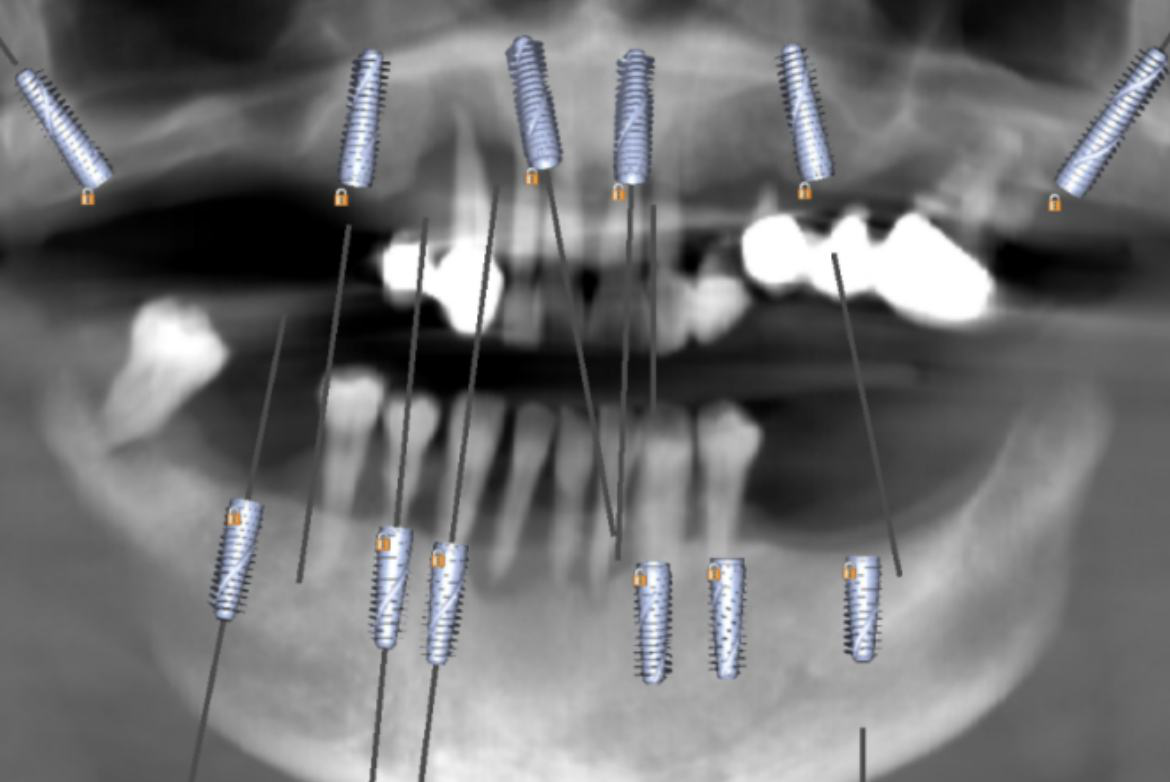
An example of implant placement planning in specialized software.
At this stage, the implant dimensions and positions are determined. In this clinical case, the following positions and sizes were selected for XGATE Dental X3 series implants with an internal hex interface:
| Site | Implant size (D × L) |
|---|---|
| Upper jaw: 15, 11, 21, 25, 27, 17 | |
| 15 | 3.75 × 13 mm |
| 11 | 3.75 × 13 mm |
| 21 | 3.75 × 13 mm |
| 25 | 3.75 × 13 mm |
| 27 | 3.75 × 16 mm |
| 17 | 3.75 × 13 mm |
| Lower jaw: 43, 33, 34, 44, 46, 36 | |
| 43 | 3.75 × 11.5 mm |
| 33 | 3.75 × 11.5 mm |
| 34 | 3.75 × 11.5 mm |
| 44 | 3.75 × 11.5 mm |
| 46 | 3.75 × 11.5 mm |
| 36 | 3.75 × 10 mm |
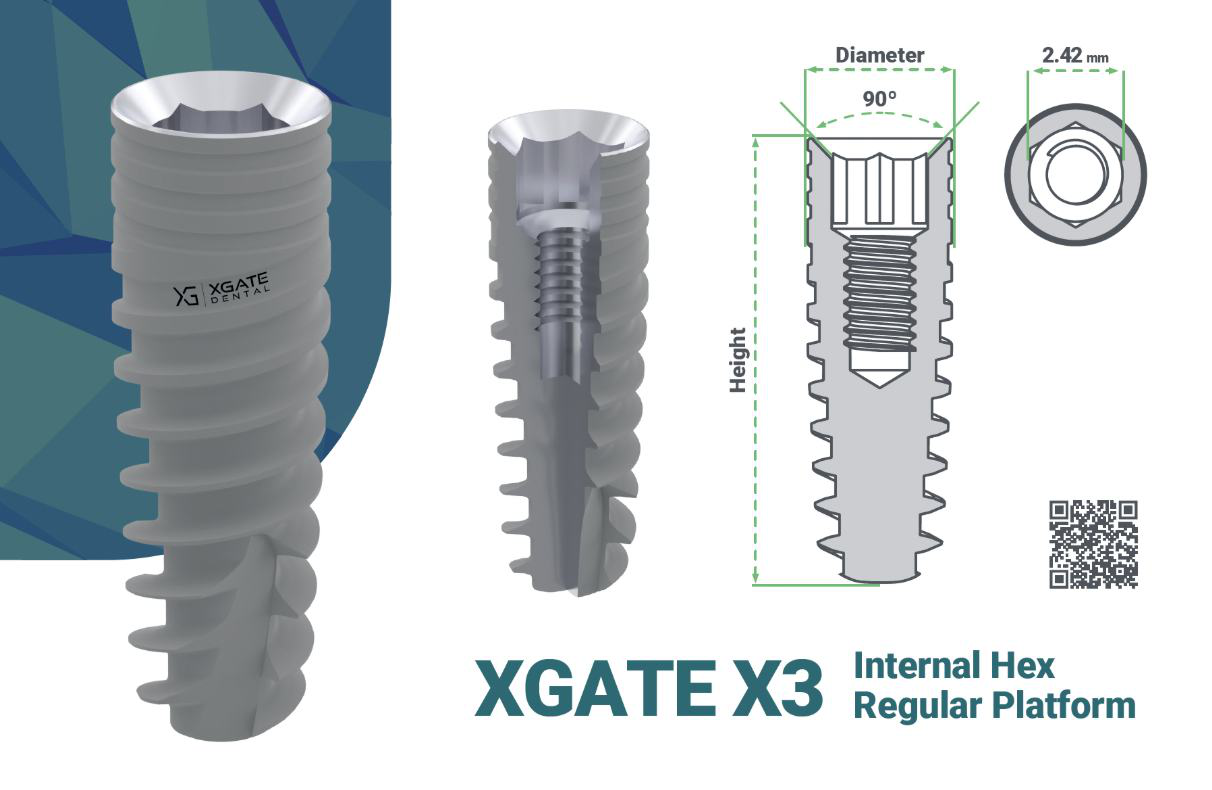
XGATE X3 — internal hex, Regular Platform.
Surgical protocol
Using the same software package, a surgical guide is designed and manufactured, which allows for the placement of the implants precisely in accordance with the approved plan.
The surgical phase of the treatment then proceeds in the following sequence:
- Extraction of the remaining teeth.
- Placement of the surgical guide.
- Performing tissue punching at the implant placement sites.
- Preparation of the implant osteotomies according to the parameters determined during the planning phase.
- Placement of the implants through the guide sleeves of the surgical guide.
- Verification of primary implant stability and a control panoramic radiograph.
- Placement of V-Type Multi-Unit Abutments. V-Type Multi-Units provide a passive fit and feature an ultra-low profile, which increases the mechanical strength of the prosthesis by increasing the wall thickness at the prosthesis-cylinder interface. In this case, Multi-Units with transgingival heights of 2 mm and 3 mm were used, together with Multi-Unit level scan bodies for V-Type and 6 mm XGATE titanium cylinders.
- Delivery of the screw-retained provisional prosthesis.
- Occlusal check.
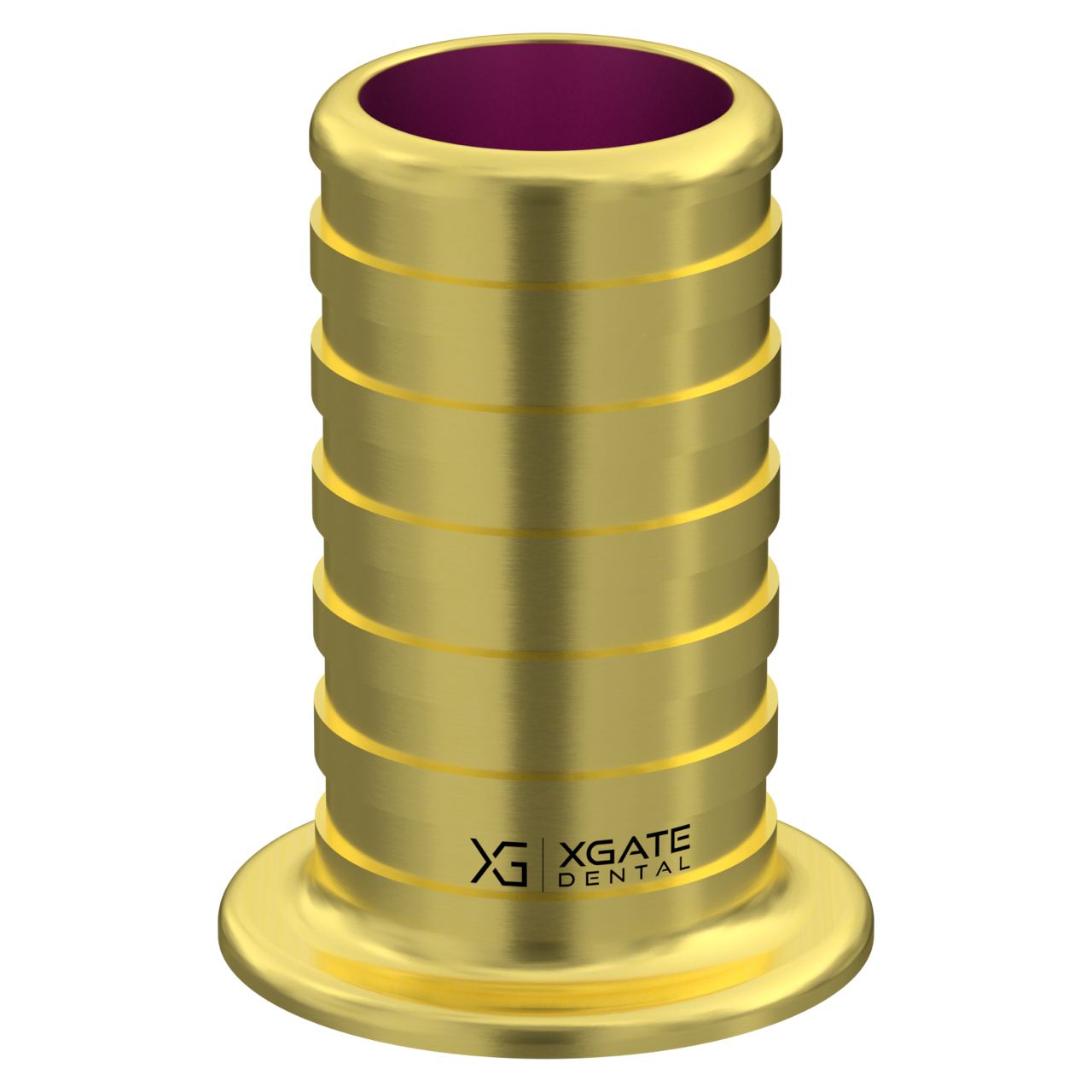
6 mm XGATE titanium cylinder.
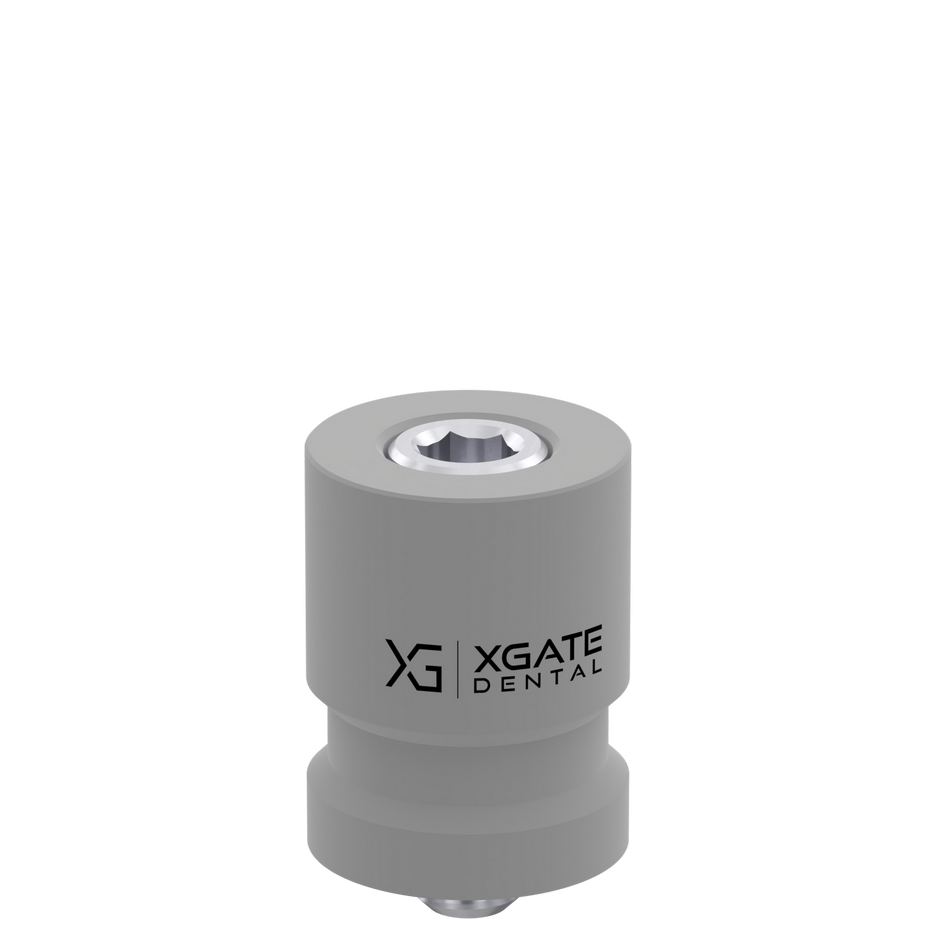
Multi-Unit level scan body for V-Type.
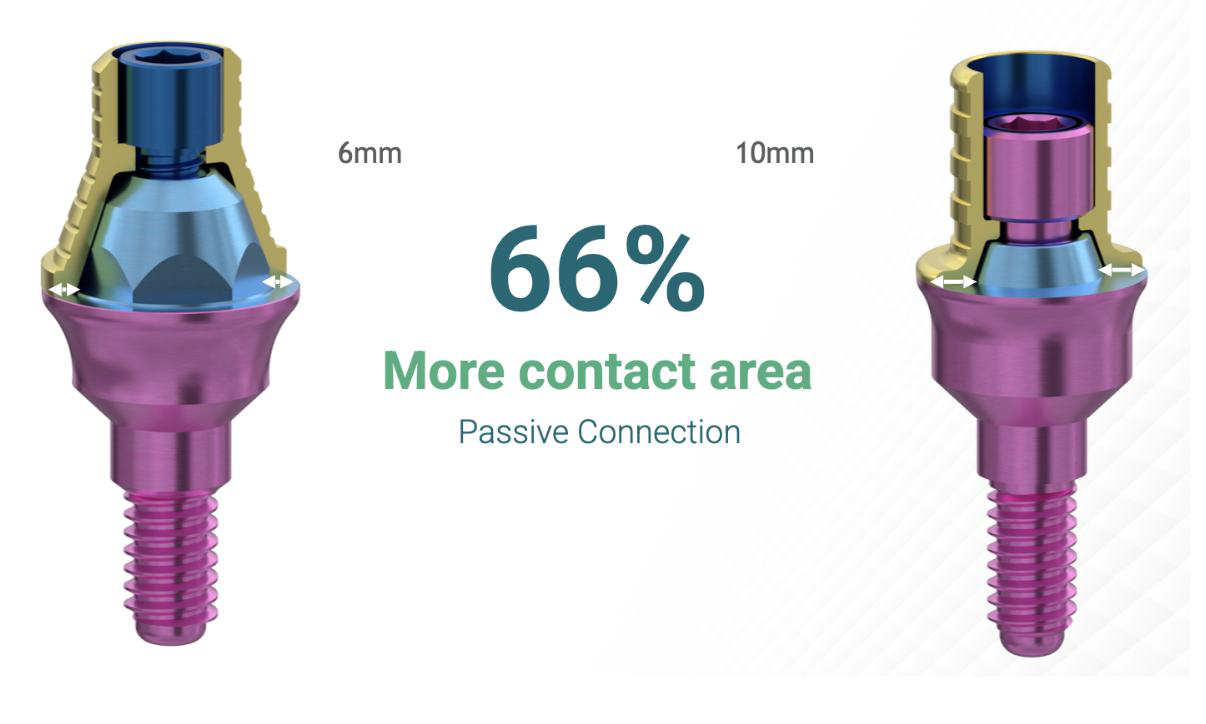
Passive connection of the V-Type Multi-Unit: 66% more contact area.
Key stages of the surgery
The photos below show the key stages of the surgery.
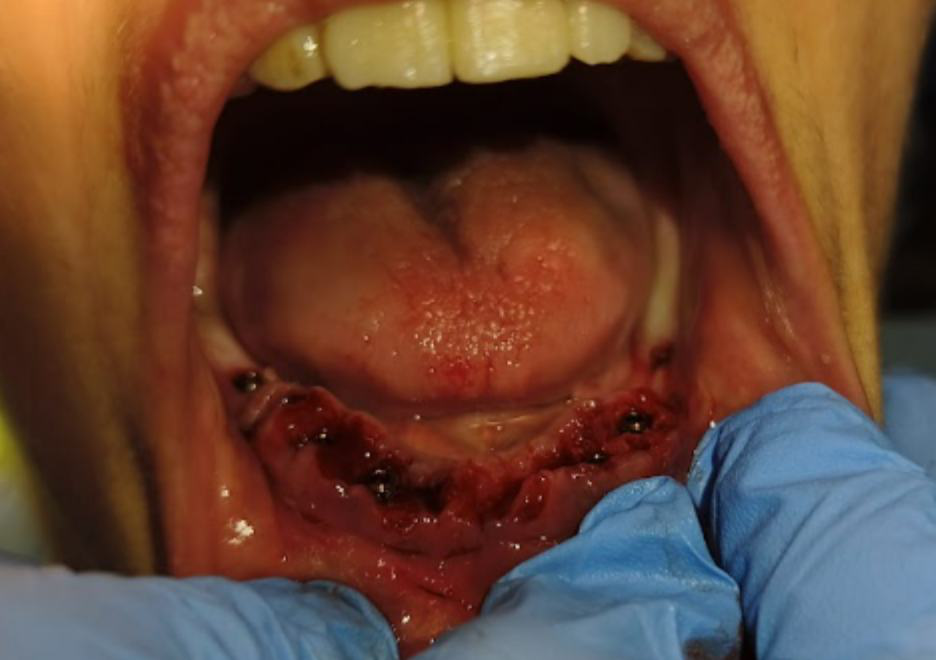
Placed implants with V-Type Multi-Unit Abutments.
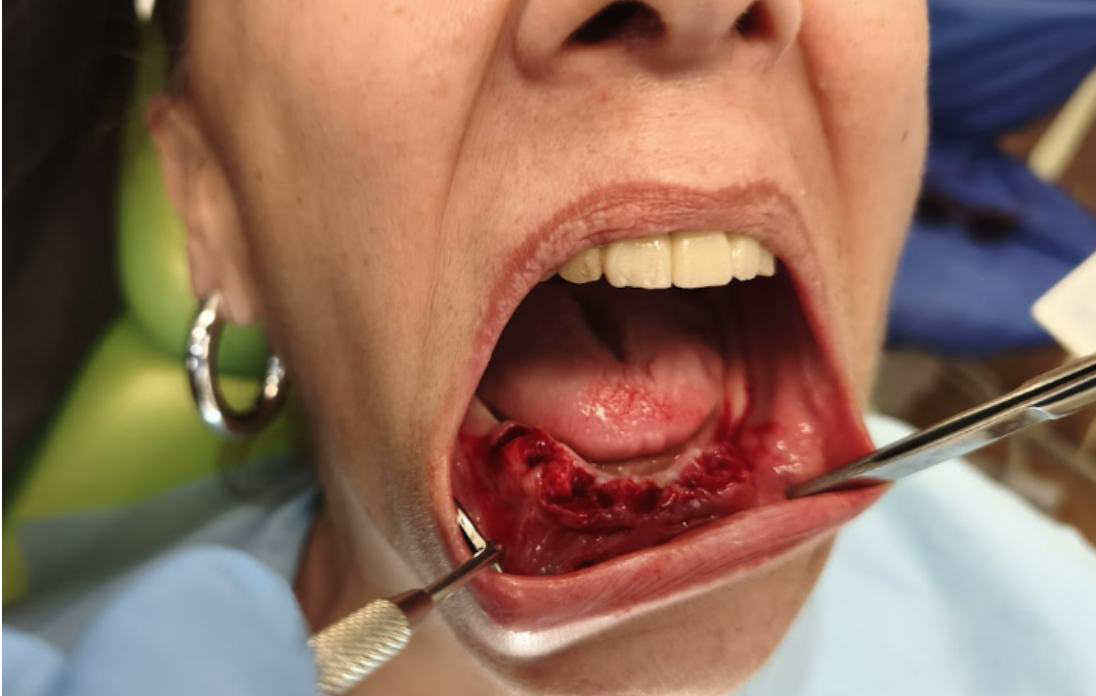
The situation following atraumatic extractions in the mandible.
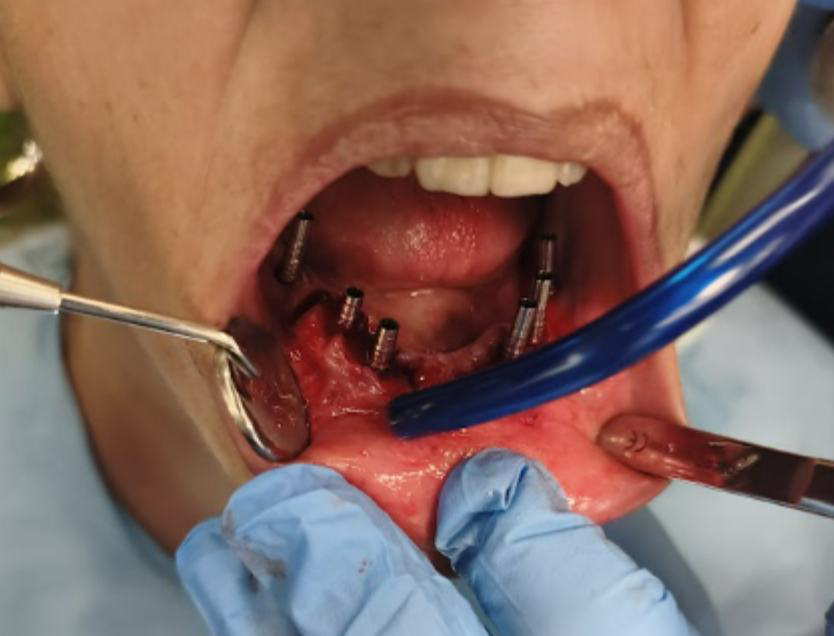
Long cylinders for securing the maxillary provisional prosthesis.
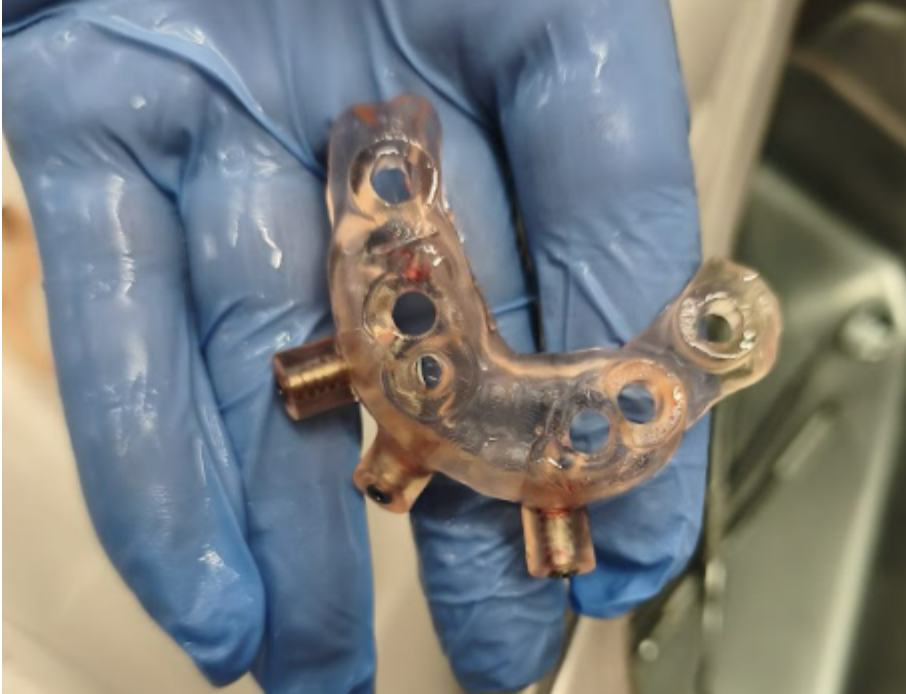
Surgical guide for precise implant positioning.
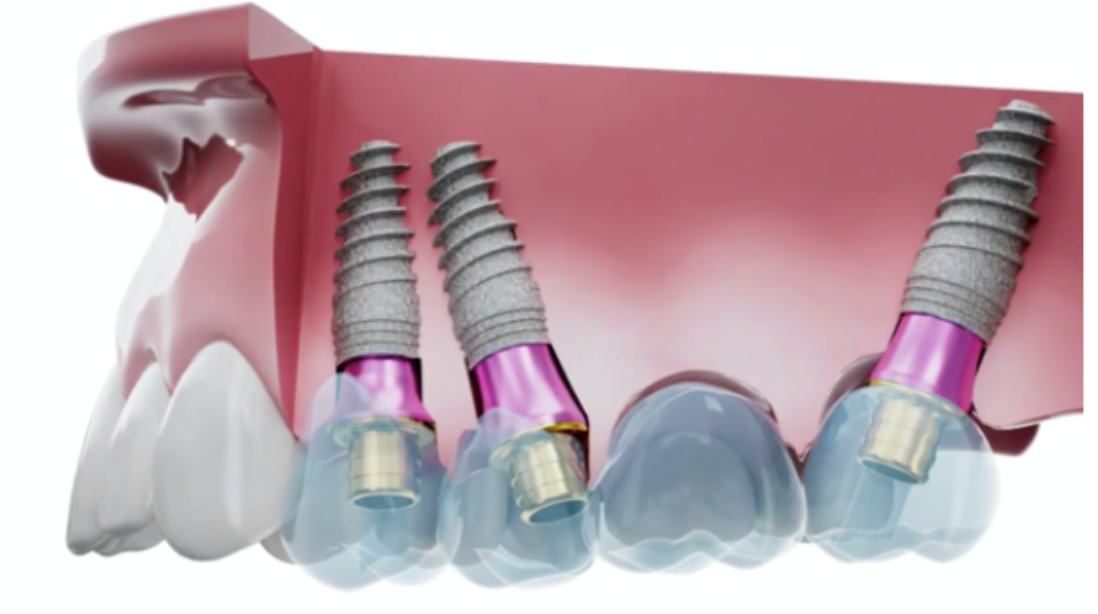
Angle correction with straight V-Type Multi-Units.
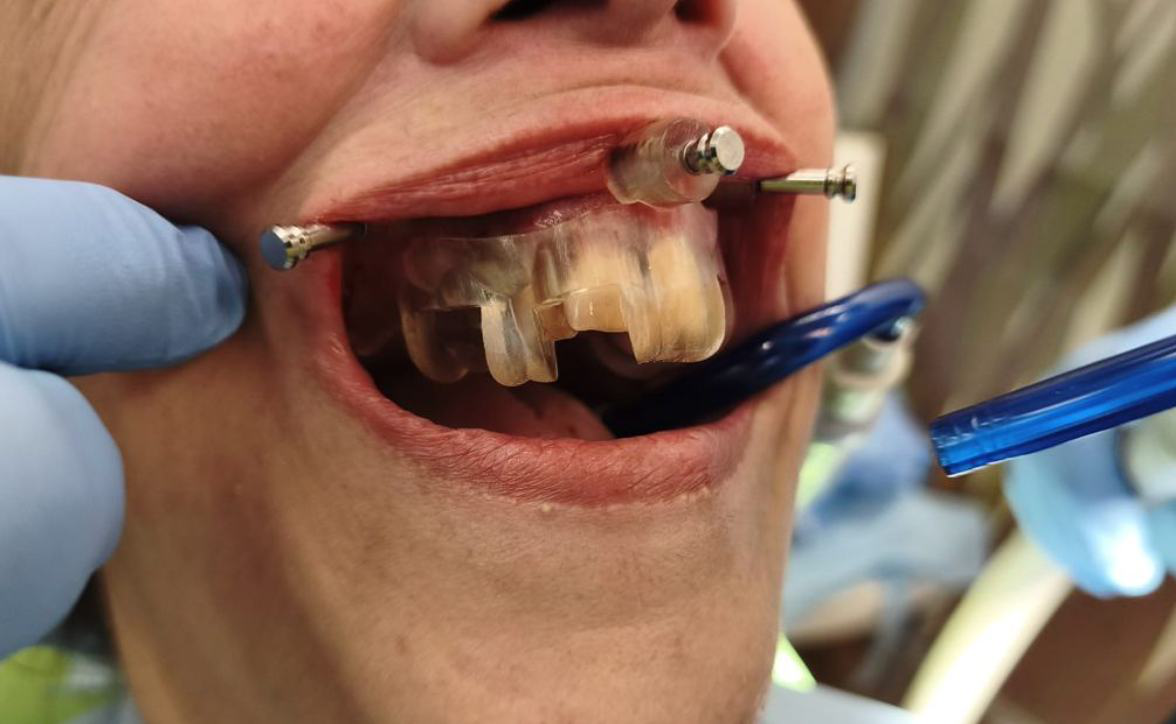
Checking the guide seating before the complete extraction of the maxillary teeth.
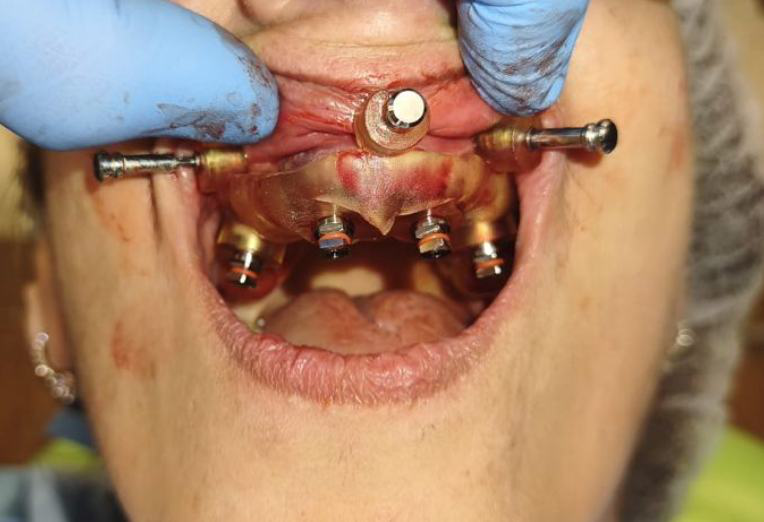
Guided implant placement in the maxilla.
Result
Upon completion of the surgical phase, during the same visit, the patient was fitted with a fixed, screw-retained provisional prosthesis supported by the implants, which she wore throughout the entire osseointegration period.
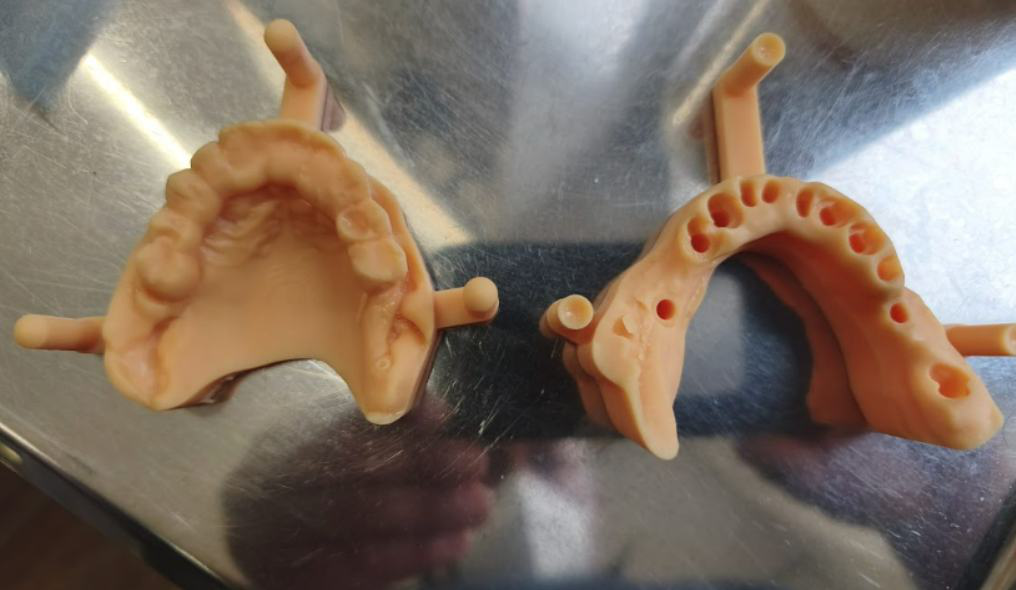
Screw-retained provisional prostheses.
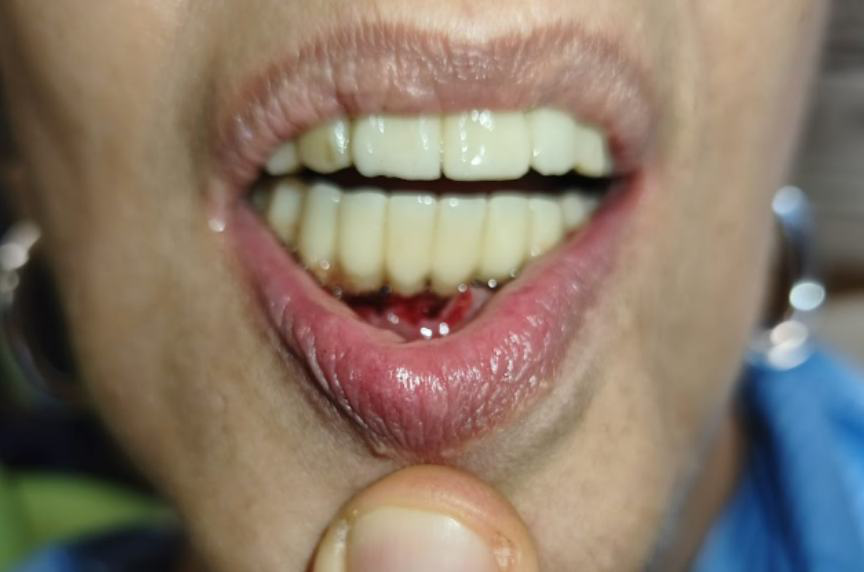
Provisional prosthesis in place — frontal view.
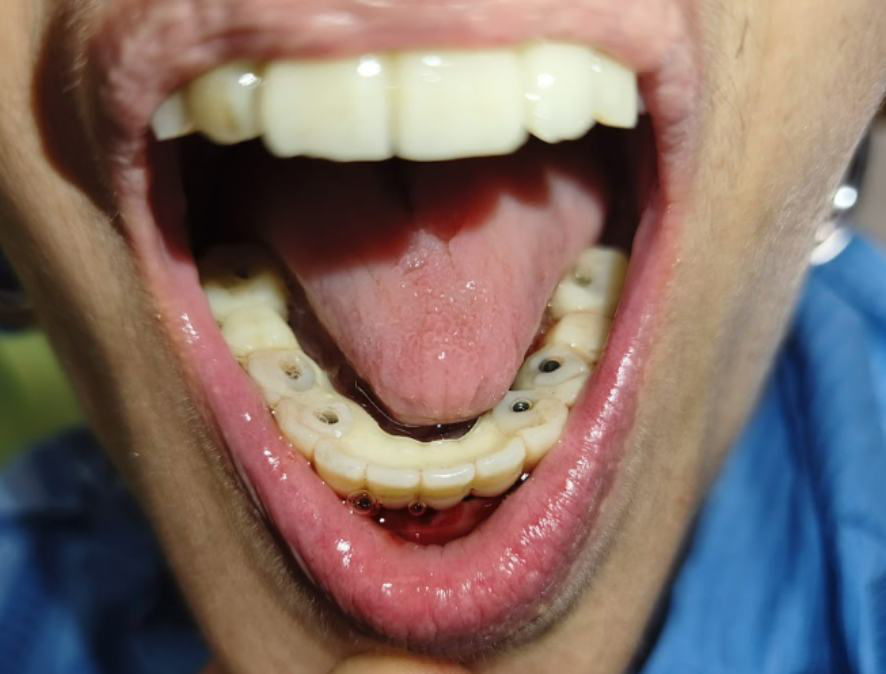
Provisional prosthesis in place — occlusal view.
The photos above primarily illustrate the workflow for the mandible; all procedures for the maxilla were performed in a similar manner.
Thus, the patient came to the clinic with an extremely unsatisfactory condition of her dentition, and two hours later left with implants placed using guided surgery technology and a full-arch fixed prosthesis supported by the implants.
Thanks to the use of a surgical guide, the intervention was minimally invasive: there were no incisions or flap elevations, and no sutures were required.
Moreover, this treatment has had a significant psychological impact: it gives the patient a new life. For a long time, she had been unable to masticate food properly and, most importantly, was deprived of the joy of smiling freely.
Interested in achieving similar clinical outcomes? For technical specifications or ordering information regarding XGATE products, please reach out to our team or our representatives in your country.
XGATE Dental Products Used in Case Study
This clinical case utilized XGATE X3 implants with V-Type multi-unit abutments, titanium cylinders and digital components for a full-arch rehabilitation of both the maxilla and the mandible using the Full Arch on 6 protocol.
Download Resources
Get the complete case study and explore our product catalog
Case Study • PDF • 4.2 MB
📥 Download Case StudyProduct Catalog • Online
🔍 View Product CatalogWe hope you found this clinical case interesting. If you have any questions about the characteristics and delivery of XGATE Dental products, please contact us in any convenient way.
XGATE Dental Group GmbH
Falkensteiner Straße 77, 60322
Frankfurt am Main
Germany
E-mail: [email protected]
350 W Passaic
St Rochelle Park, NJ 07662
United States
Disclaimer: Any medical or scientific information provided in connection with the content presented here makes no claim to completeness and the topicality, accuracy and balance of such information provided is not guaranteed. The information provided by XGATE Dental Group GmbH does not constitute medical advice or recommendation and is in no way a substitute for professional advice from a physician, dentist or other healthcare professional and must not be used as a basis for diagnosis or for selecting, starting, changing or stopping medical treatment.
Physicians, dentists and other healthcare professionals are solely responsible for the individual medical assessment of each case and for their medical decisions, selection and application of diagnostic methods, medical protocols, treatments and products.
XGATE Dental Group GmbH does not accept any liability for any inconvenience or damage resulting from the use of the content and information presented here. Products or treatments shown may not be available in all countries and different information may apply in different countries. For country-specific information please refer to our customer service or a distributor or partner of XGATE Dental Group GmbH in your region.